
Last updated November 22, 2026
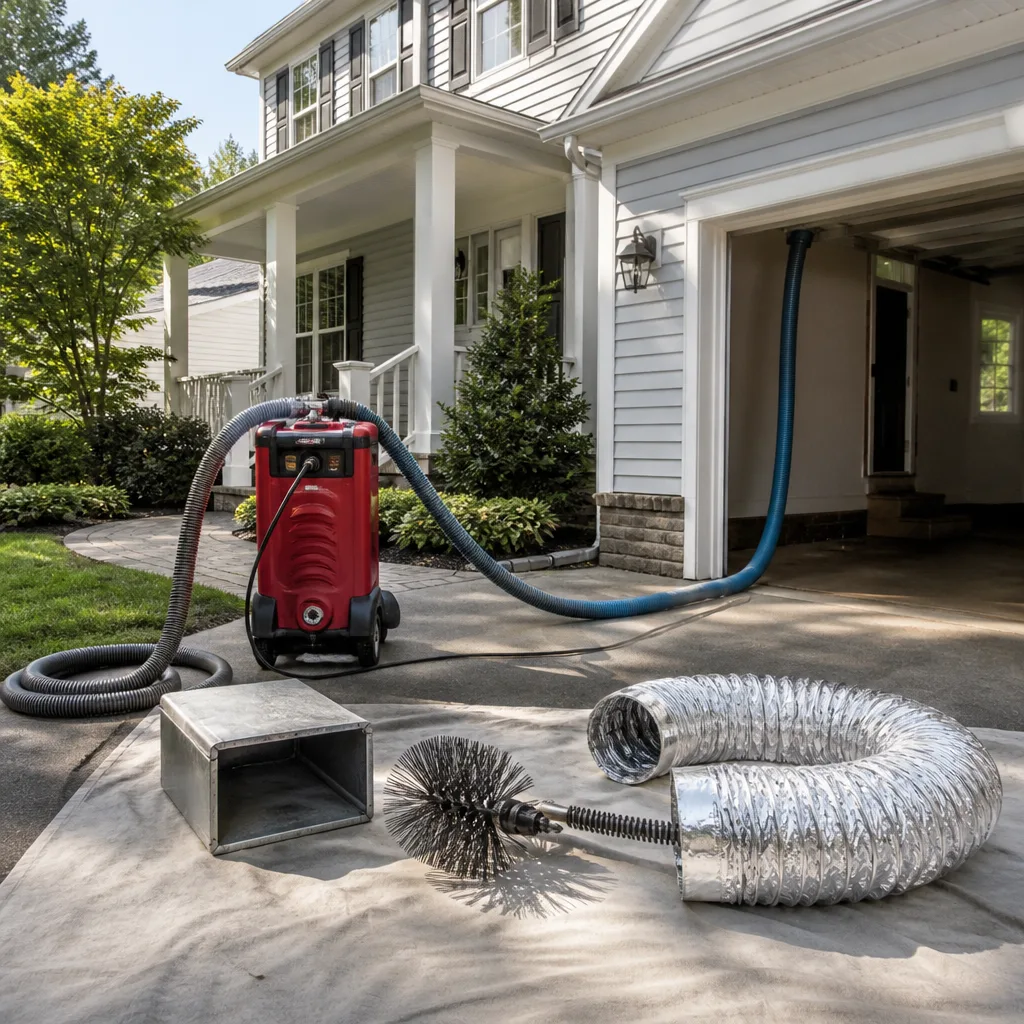 Whole-home duct cleaning
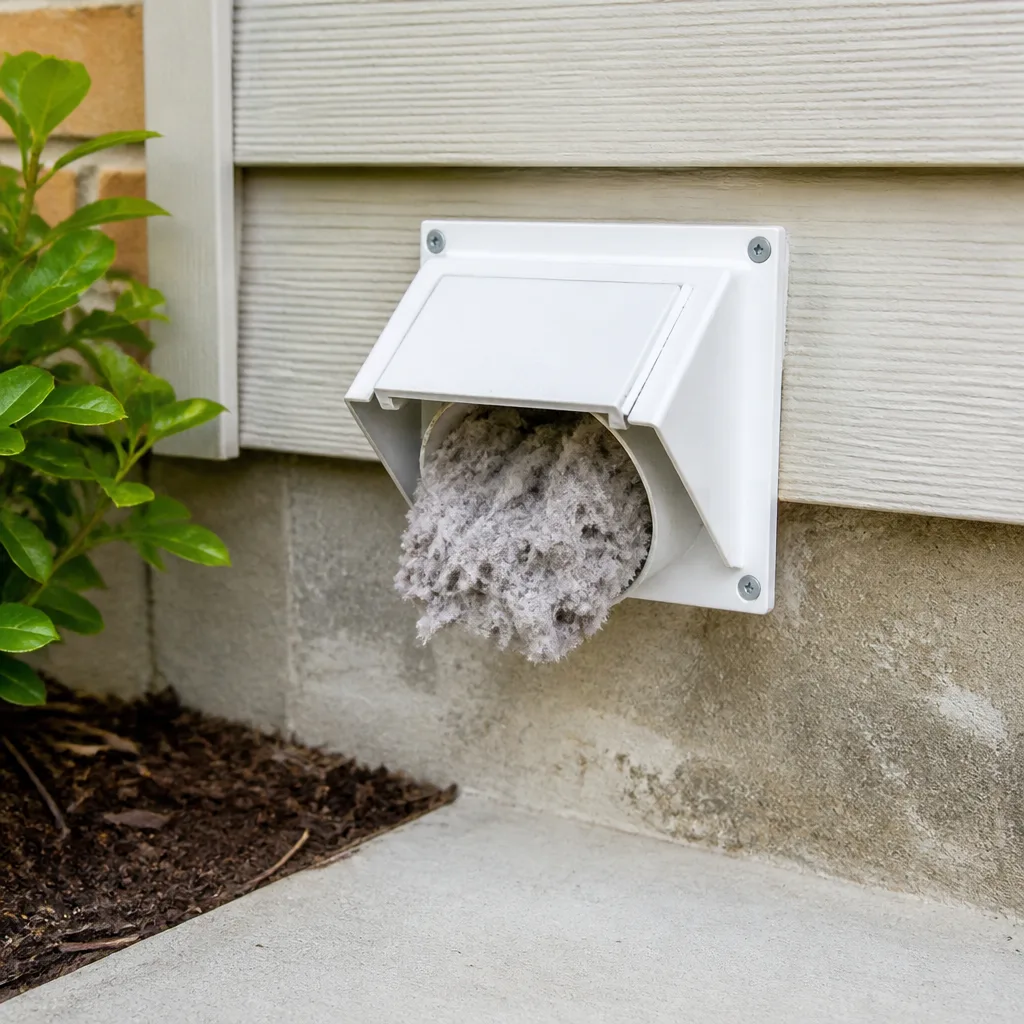 Dryer vent cleaning
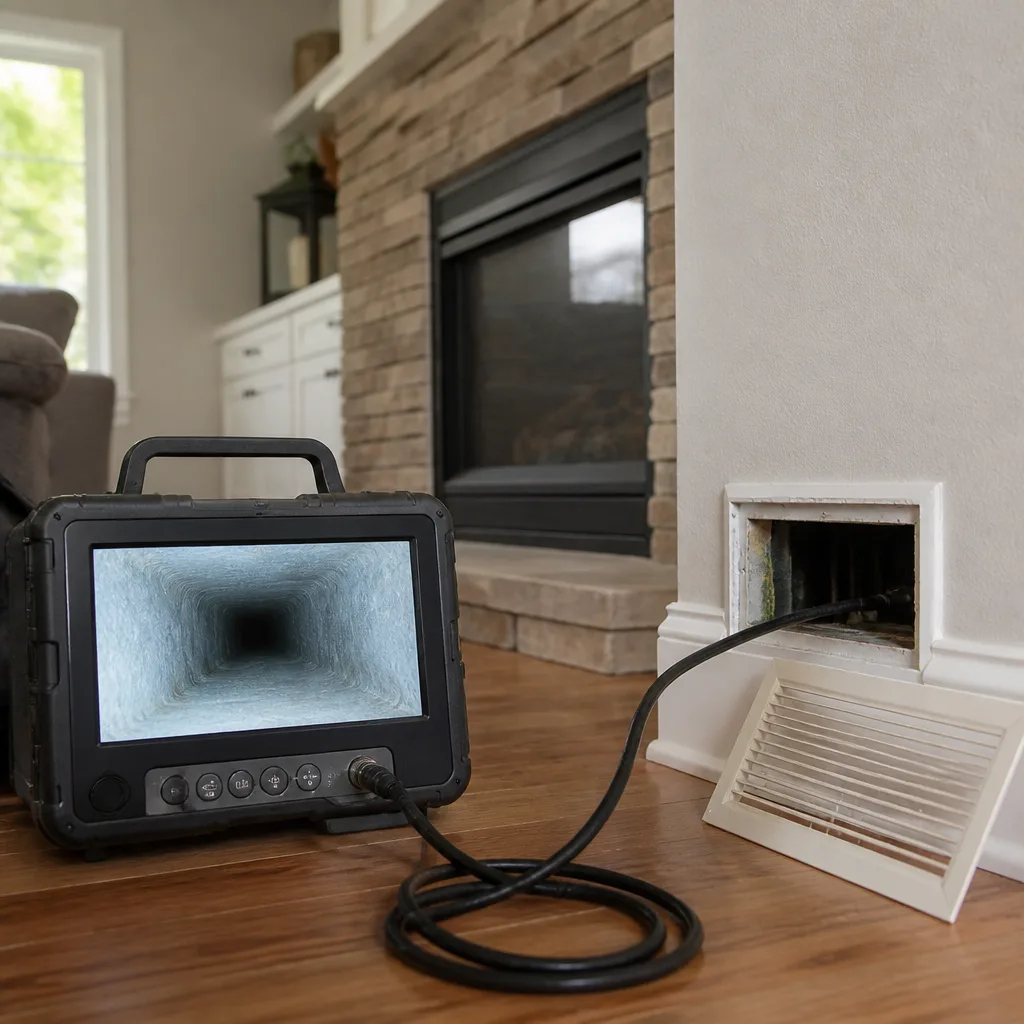 Camera inspection
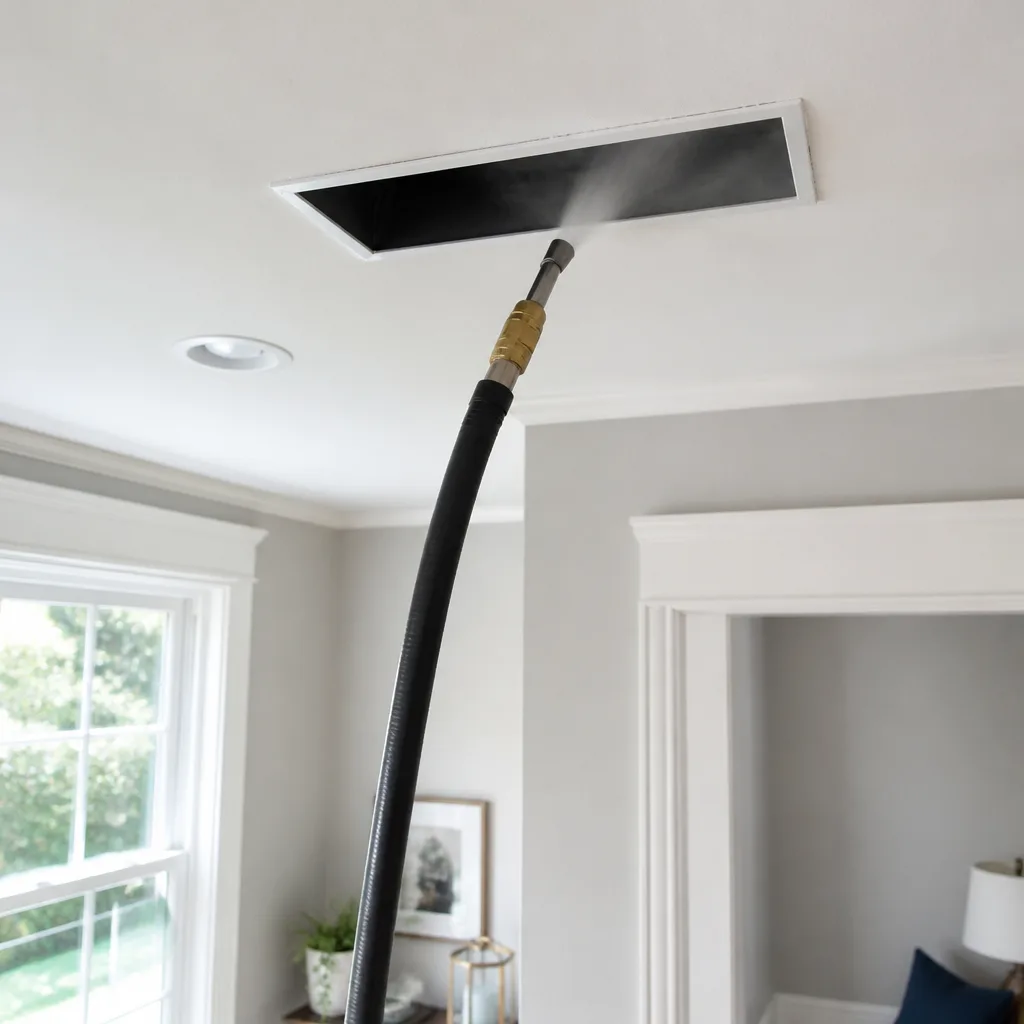 Sanitizing & deodorizing
Whole-system duct and dryer vent check with before-and-after photos - you see exactly what came out of your vents
That "$99 whole-house special" is a bait ad - the real number appears once they are in your hallway, or the "clean" is a shop-vac at the register. We photograph the inside of your ducts before and after instead.
Air Duct Cleaning Maintenance Checklist for West Hills Homeowners
Changing your MERV-8 filter on schedule while wildfire smoke events are pushing PM2.5 through your return grilles is like rotating your tires while your engine burns oil. The right action, but not the one that matters most right now. Most West Hills homeowners treat duct maintenance as a filter calendar. It isn’t. It’s a system-level inspection protocol, and this hillside climate gives that system three seasonal punches a year: Santa Ana wind events, summer smoke intrusions, and the dry heat that bakes debris into ductwork until it’s fused. What follows is the checklist we run as technicians, written so you can use it yourself between professional visits. You’ll learn month-by-month tasks, how to read your own ductwork without special tools, and when to log a cleaning instead of scheduling one.
Quick Answer
A West Hills air duct maintenance checklist should cover five repeating tasks: return grille and register inspections before and after every Santa Ana wind or wildfire smoke event, filter replacement based on pressure not calendar, visual checks of accessible duct liner and drain pans, an activity-based cleaning log rather than a fixed-year schedule, and annual professional whole-system cleaning and sealing for homes with pets, allergies, or recent renovation. If your home has never had a documented cleaning, start there before layering on the rest.
Styles & brands we work with
- Whole-home duct cleaning
- Dryer vent cleaning
- Camera inspection
- Sanitizing & deodorizing
Table of Contents
- The West Hills Seasonal Duct Calendar
- How to Inspect Return Grilles and Register Boots Without Tools
- Filter Selection Decision Tree for West Hills Homes
- What to Check on Your Coil and Drain Pan During Tune-Ups
- Building a Cleaning Log That Tracks Activity, Not Years
- Post-Renovation Duct Assessment
- The Dryer Vent Task Most Checklists Skip
- Sealing and Repair: The Step After Cleaning
The West Hills Seasonal Duct Calendar
West Hills has a specific set of seasonal triggers that most generic duct-cleaning advice ignores. Because there’s no meaningful freeze-thaw cycle and the winters are mild, the biggest contamination events here don’t come from cold. They come from wind, smoke, and heat.
Use this calendar as your base, then adjust for your home’s activity.
- Late winter (February – March): pre-Santa Ana inspection. Before the wind season arrives, open every return grille you can reach and check for debris accumulation on the fins, moisture staining on the boot, and any visible dust matting on the plenum interior. Note it in your log. This is the last easy window before wind-driven particulate starts loading your system.
- Spring (April – June): post-wind filter and plenum check. Santa Ana wind events push fine particulate through return grilles. After the last major wind event of the season, pull your filter and hold it to a light. If you can’t see light through the media anywhere, replace it. Also run your hand inside the return plenum and look for a fine dusty film – if the film is heavy, log it for a professional evaluation.
- Summer (July – September): wildfire smoke and dry heat window. Southern California wildfire season runs into this period and beyond. During any smoke event, run the system on recirculate with windows closed, but also check the filter every couple of weeks. Dry heat accelerates dust baking onto coil surfaces and duct interior, which is why summer is a good time to schedule a professional whole-system cleaning if it’s been due.
- Fall (October – November): interior assessment and HVAC tune-up. Have the HVAC system serviced and ask the technician to photograph the evaporator coil and drain pan (more on what to ask below). Fall is also when most West Hills homes have settled into a stable occupancy pattern, which makes it a good baseline point for your log.
- Winter (December – January): light maintenance only. Keep filters clean, check grilles after any unusual wind event, and don’t skip your annual schedules. The mild winters here don’t stress ductwork, but they also don’t clean it, so contamination carried over from summer stays put.
For a deeper baseline on what full cleaning includes, see our air duct cleaning service page. The calendar above only works if the underlying system is clean to start with.
How to Inspect Return Grilles and Register Boots Without Tools
You don’t need a borescope to read most of what your ductwork is telling you. The mechanical connections at every return grille and register are the most information-dense spots in the system, and every one of them is visible with the grille cover off. What you’re looking for is debris buildup on surfaces you can reach, moisture staining, and liner deterioration.
Work through this list at the end of each season.
- Fin buildup. Run a dry paper towel across the grille fins. If the towel comes away grey with a thick coat, the return is loading. A light film is normal. Heavy matting means the system upstream of the grille is carrying debris it shouldn’t.
- Liner condition. On the accessible portions of the boot or plenum, look at the interior lining. It should be intact and continuous. If you see peeling, exposed metal, or a dark fibrous residue, the liner is deteriorating and is now itself a source of contamination. That’s a repair issue, not a cleaning issue, and needs a professional evaluation.
- Moisture staining. Look for brown rings, dark patches, or a chalky white haze inside the plenum. Any of those point to condensation or a leaky connection somewhere upstream. Duct cleaning won’t fix a moisture problem; it has to be found and sealed first.
- Return plenum film. With the grille off, wipe a small area of the return plenum interior. If a fresh towel wipes clean and a second towel wipes the same area again and comes away dirty, there’s ongoing deposition. If the second towel is clean, the surface is stable.
- Airflow feel test. With the system running on fan, hold your hand near each supply register. If one register is dramatically weaker than the rest, that branch is likely restricted or dis-connected. Note the location in your log.
The Air Duct Cleaning West Hills team routinely finds that accessible grille and plenum checks identify the exact duct sections that need professional attention, which shortens the assessment on the visit and narrows what equipment we bring inside. Rotobrush rotary brush systems and Nikro negative-pressure extraction are the tools we rely on because they reach what a homeowner’s towel can’t, but your own inspection notes tell us where to start.
Filter Selection Decision Tree for West Hills Homes
Filter choice is where most West Hills homeowners make their one expensive mistake. The instinct after a wildfire smoke event is to go as high as possible on the MERV scale. That instinct is sometimes right and sometimes actively harmful. Older air handler configurations common in this area’s housing stock can’t push enough air through a thick MERV-13 without dropping system static pressure and starving the coil, which drags performance down and can strain the blower.
Work through the questions in order.
- What does your air handler say about filter size and depth? Standard 1-inch slab filters in older systems generally cap out comfortably at MERV-8 to MERV-11. A deep-pleat 4-inch or 5-inch media cabinet can usually handle MERV-13 without dropping airflow, because the greater surface area spreads the same airflow across more media.
- Is anyone in the home managing asthma, severe allergies, or a recent respiratory illness? If yes, MERV-11 is a reasonable floor and MERV-13 is worth considering if the filter housing supports it. If nobody in the home has respiratory sensitivities, MERV-8 to MERV-11 is often the right call and the higher rating buys you little.
- Is there a separate whole-home air cleaner in the system? If a Honeywell or Aprilaire whole-home filtration unit is already installed, the air handler filter is usually doing the first-stage job and the whole-home unit is doing the fine-particle job. In that case a MERV-8 or MERV-11 pre-filter in the return is correct, and going higher just loads the system.
- What’s the pressure drop across the filter when it’s new versus loaded? If you have a static pressure gauge, this is the cleanest measurement you can take. Without one, use the light-through-media test after each wind or smoke event. A filter that’s opaque anywhere means replacement time, regardless of how long it’s been installed.
- When in doubt, size up before you spec up. If a homeowner wants MERV-13 filtration and only has a 1-inch slot, the right fix is usually a filter cabinet upgrade, not a thick 1-inch MERV-13 that drops airflow. That’s an HVAC-side conversation, not a duct-cleaning conversation, but it’s the one homeowners skip.
For homes that go this far, a whole-home Honeywell or Aprilaire cabinet upgrade is a real option and we can install and service those systems directly. That removes the guesswork because the filter media is sized for the system rather than forced into a slot meant for a thinner slab.
What to Check on Your Coil and Drain Pan During Tune-Ups
The coil and drain pan are where most hidden contamination problems live, and they’re also the two components a homeowner is least able to inspect directly. The realistic approach is to have the HVAC technician document them during an annual tune-up and then use those photos in your log.
Specifically, ask the technician for the following:
- A photograph of the evaporator coil face before any cleaning. This is your baseline. If the coil looks loaded with dust or has visible biological growth, that’s the upstream signal a duct cleaning is likely due.
- A photograph of the drain pan and the drain line outlet. Standing water, slime buildup, or dark residue in the pan means either the pan isn’t draining or there’s microbial growth downstream. Either way, it’s information for your log.
- The coil’s pressure-drop or airflow reading if the technician measures it. Static pressure across the coil is one of the cleanest indicators of coil fouling, and most technicians will measure it if asked.
- Written notes on the return-side filter condition at the time of service. This connects the coil condition back to filter management, and over three years it gives you a real dataset to base cleaning intervals on instead of guessing.
You can do one thing yourself: check for standing water around the indoor air handler on a routine basis, especially during summer cooling months when condensate runs constantly. Any water where it shouldn’t be is a call-the-technician event, not a wait-and-see event. Do not open the air handler cabinet to look at the coil yourself – the electrical components and the coil are not homeowner-serviceable, and the risk of touching live wiring or bending fins is real. Let the technician open it.
Our HVAC cleaning service covers coil cleaning and cabinet cleaning as part of the same visit, so the documentation and the cleaning happen in one trip rather than two.
Building a Cleaning Log That Tracks Activity, Not Years
The advice to “clean your ducts every 3 to 5 years” is the least useful line in the industry. Two homes on the same street in West Hills can need completely different intervals. A home with three pets, an active kitchen, and a dust-generating renovation ten years ago might need a cleaning every two years. A single-occupant home with no pets might go six years between cleanings without a problem. What actually determines the interval is activity, not the calendar.
Track the following in a simple log:
- Pets. One point per pet. Dogs and cats shed continuously, and that shedding loads return filters and plenums faster than any other single factor.
- Renovation activity in the last 24 months. Drywall work, flooring replacement, sanding, or major trim carpentry all push fine particulate into the duct system. Any renovation in the last two years is worth logging.
- Air quality event days. Every major Santa Ana wind day and every wildfire smoke day is worth a tick in the log. A home that logs 20 event days in a season is going to need cleaning sooner than a home that logs three.
- Filter change dates and filter MERV. Write the date and the MERV number every time you change. Over two years this becomes the single best indicator of how fast your system is loading.
- Visible debris observations. Any time a grille wipe pulls heavy matting or the return plenum film gets visible, note the date and which grille.
- Service calls and outcomes. Note every professional visit, what was done, and what was found. If a coil cleaning reveals heavy deposit, add that to the log as an urgency marker for whole-system cleaning.
The log-and-schedule rule we use: if any of the following fires, it’s time to schedule a professional cleaning rather than just a filter change. Two consecutive heavy return-grille wipes. Visible liner deterioration. A coil photograph showing load. A renovation in the last 12 months on a home with pets. Or a medical change in the household (new asthma diagnosis, allergy onset) that raises the stakes on air quality. Three of those triggers is a scheduling event even if your “every 3 to 5 years” calendar says otherwise.
Post-Renovation Duct Assessment
Renovations are the single most common cause of hidden duct contamination we see in West Hills. Drywall dust is unusually fine and it settles into the return plenum and supply branches within days. It doesn’t stay in the air, which is why the problem gets overlooked; it settles, then re-lofts every time the system cycles. The home looks clean for weeks and then the owners notice a dusty film on furniture that keeps coming back no matter how often they wipe.
Any renovation that involved drywall, sanding, or flooring work larger than a single room warrants the following assessment within 30 to 90 days of completion.
- Photograph every return grille you can reach. Don’t clean them. Photograph them. This is your baseline and it matters if you later need to document a problem.
- Pull the return filter and photograph it. If the filter is heavy with fine grey dust after the renovation, that’s a strong signal the plenum is also loaded.
- Wipe the inside of one accessible return plenum with a light-colored cloth. Photograph the cloth. If it comes back with a grey chalky film, hold it to the light. If it looks like drywall dust, log it.
- Ask the contractor whether they isolated the return grilles during the work. Some do, most don’t. If they didn’t, assume post-renovation cleaning is needed and get it scheduled rather than deferring.
- Book professional cleaning within the first year. The longer drywall dust sits in the plenum, the more of it fuses to interior surfaces and the harder it is to remove cleanly. A late cleaning still works; an early cleaning works better.
Abatement Technologies HEPA filtration equipment is what we use in post-renovation cleanings because the containment matters as much as the agitation. If you’re mid-renovation and haven’t yet scheduled the post-work cleaning, the estimate is free and the assessment often takes 30 minutes on site.
The Dryer Vent Task Most Checklists Skip
Duct cleaning checklists almost always stop at the HVAC system. That leaves out the single component of home ductwork most often implicated in residential fires: the dryer vent. Lint accumulates on the interior of the vent run, and once it builds up enough to reduce airflow, the dryer’s exhaust heat has nowhere to go. That’s one of the leading causes of residential fire starts, and it’s frequently ignored by duct-only cleaners who won’t touch dryer vents.
Do the following checks yourself, and book dryer vent cleaning when the interval comes due.
- Check the outside vent flap after every few dryer loads. Open the flap and look for lint clumps at the outlet. If lint is visibly accumulating against the flap, the vent run is loading.
- Feel the exhaust air temperature. Warm, moist air leaving the outlet is normal. Hot, dry air with low volume is a red flag for restricted airflow. A dryer that’s noticeably heating up at the top drum after a cycle is another.
- Time a typical load. If the dryer is taking longer than usual to dry a normal load, and you’ve already cleaned the lint screen, the vent run is the next place to look.
- Check for crushed or disconnected vent runs behind the dryer. The transition duct (usually the flexible section between the dryer and the wall) is the most common point of failure. If it’s crushed, disconnected, or has a visible tear, get it looked at before running the dryer again.
- Schedule professional cleaning on a log-driven interval. Dryer vent cleaning should go into the same log as your HVAC cleaning. For most homes it’s an annual to every-two-years task, sooner with heavy laundry volume.
Fire safety is not the only reason this task matters. A clean dryer vent also delivers lower energy use per load and a longer machine life. Both of those benefits only show up when the vent is actually clean, which means looking at the interior of the run, not just the outlet flap.
Sealing and Repair: The Step After Cleaning
Cleaning removes the existing contamination. It doesn’t stop new contamination from getting in, and it doesn’t stop conditioned air from leaking out. That’s why cleaning alone is an incomplete job for most West Hills homes that have a sealing issue. Duct repair and sealing is the step that closes the gap, and it’s the step that keeps a cleaning result from degrading within a year.
Where duct sealing matters most:
- Boot-to-floor or boot-to-drywall connections. These are the joints most likely to be loose or unsealed in West Hills homes. A visible gap here is both an air loss path and a pathway for dust, insulation fibers, and other contaminants to enter the supply side.
- Plenum-to-trunk connections at the air handler. The main return and main supply plenum connections are large joints and are frequently under-sealed. A technician can usually tell immediately from the feel of the cabinet whether a plenum joint is leaking.
- Branches with deteriorated liner. The liner itself is a cleaning problem if it’s shedding. Once the interior of the duct is lined and the liner is failing, the repair usually involves removing or rehabilitating the liner rather than just sealing.
- Return air pathways behind wall cavities. Older construction sometimes uses wall cavities as return paths, which exposes the air to whatever is inside that wall. Sealing the connection points at the grille is a partial improvement; sometimes a ducted return is the right fix.
Post-cleaning sanitizing is the third step. Guardsman-backed protection products are used to extend sanitation results beyond the visit, and this is directly relevant to households managing chronic allergies, asthma, or a recent illness. A cleaning that doesn’t sanitize and doesn’t seal is step one and two of a three-step job.
If your log shows any of the sealing issues above, get a professional assessment before the next cleaning cycle. It’s the difference between “we cleaned it” and “we took care of it.”
Common Mistakes to Avoid
- Treating filter changes as duct maintenance. They’re related but they’re not the same task. A filter change with no plenum inspection tells you nothing about the system, and this single error causes most homes in West Hills to miss contamination events entirely.
- Going to MERV-13 on an older system without checking airflow. Higher rating, lower airflow, is the classic mistake. If the system starts running longer between cycles or feels weak at the registers, the filter is starving it. Downsize before you make changes.
- Skipping the plenum inspection after Santa Ana wind events. Wind-driven fine particulate loads the return side hard, and if you don’t check it after the event you’re carrying that load into the next fire season.
- Ignoring the dryer vent because “it’s still working.” A dryer that runs longer but still dries clothes is a warning sign, not a success. Lint buildup progresses to restricted airflow, and that’s the failure mode that matters.
- Booking the cheapest duct cleaning and assuming the job got done. Cheaper quotes usually mean fewer tools on site, no containment, and no photographs of the result. Ask any cleaner to photograph your own ducts before and after. If they can’t or won’t, that tells you what you need to know.
- Cleaning without sealing afterward. A cleaning without sealing is roughly step one of three. Contamination will return on the same timeline that ran before the cleaning if the leaks aren’t addressed.
- Using a fixed 3-to-5-year calendar instead of a log. Log-based intervals catch real problems on the right timeline. Calendar intervals catch them late or not at all.
See the difference
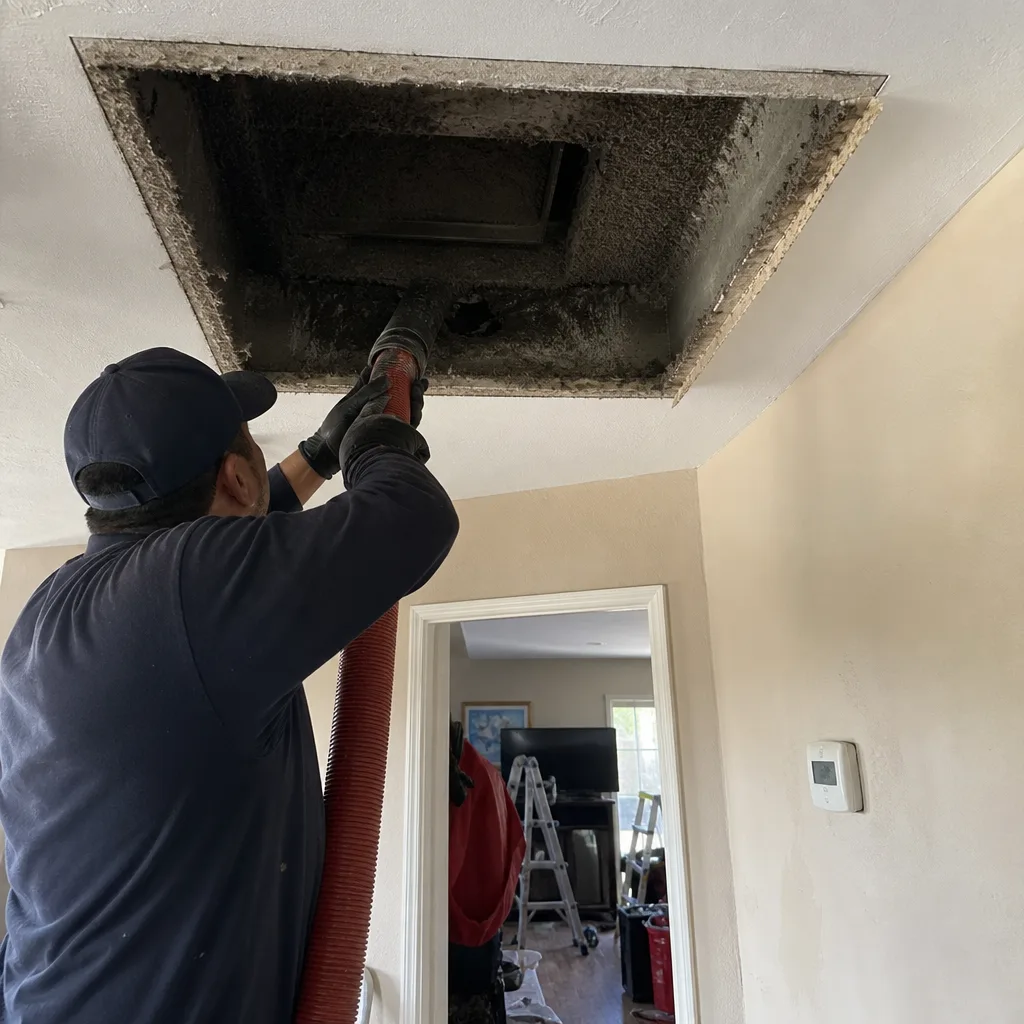 Before
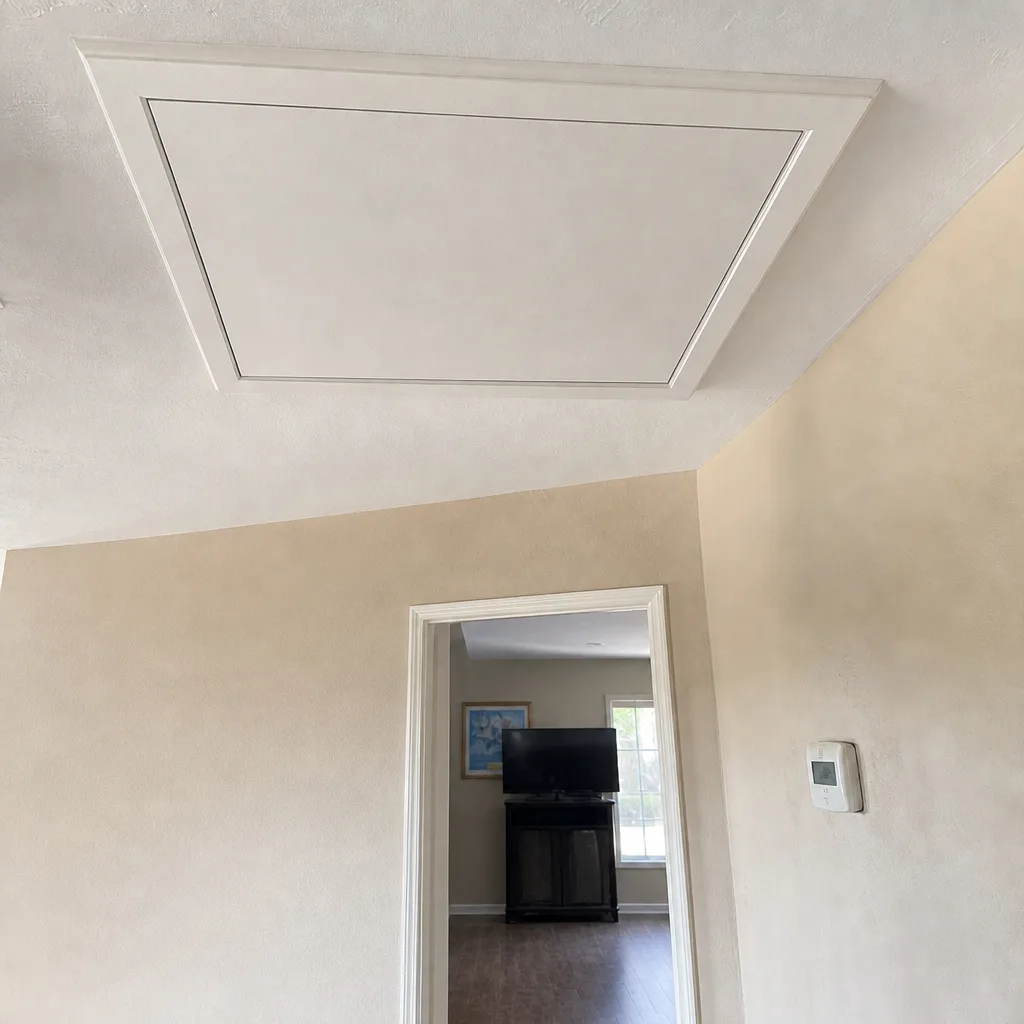 After
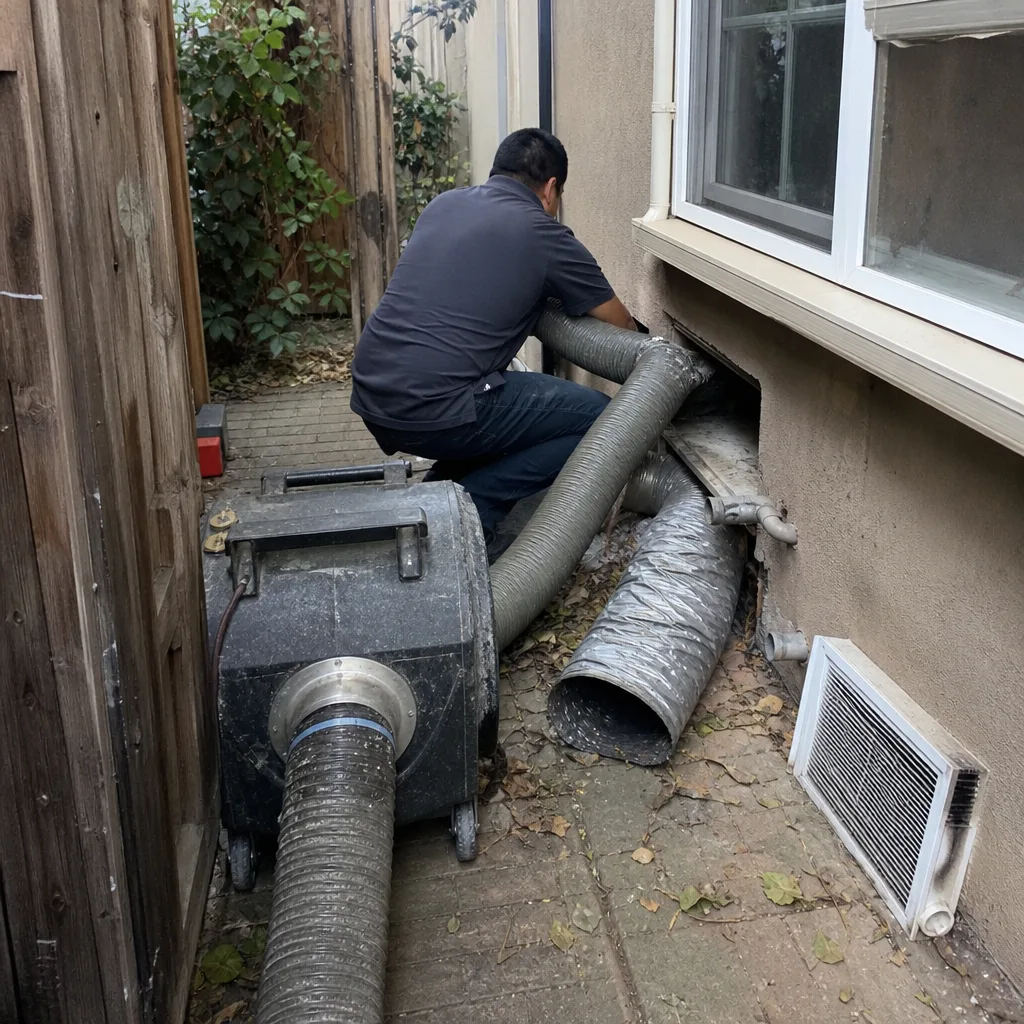 Before
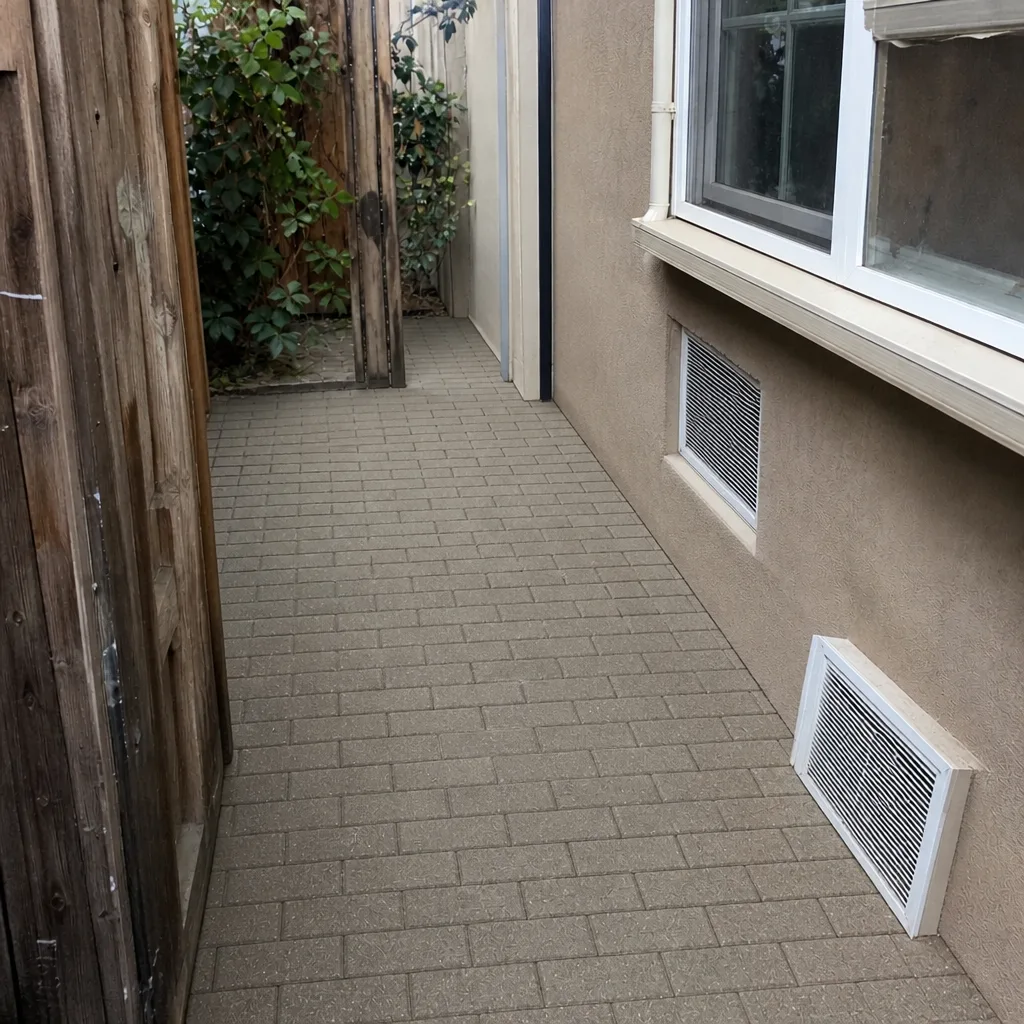 After
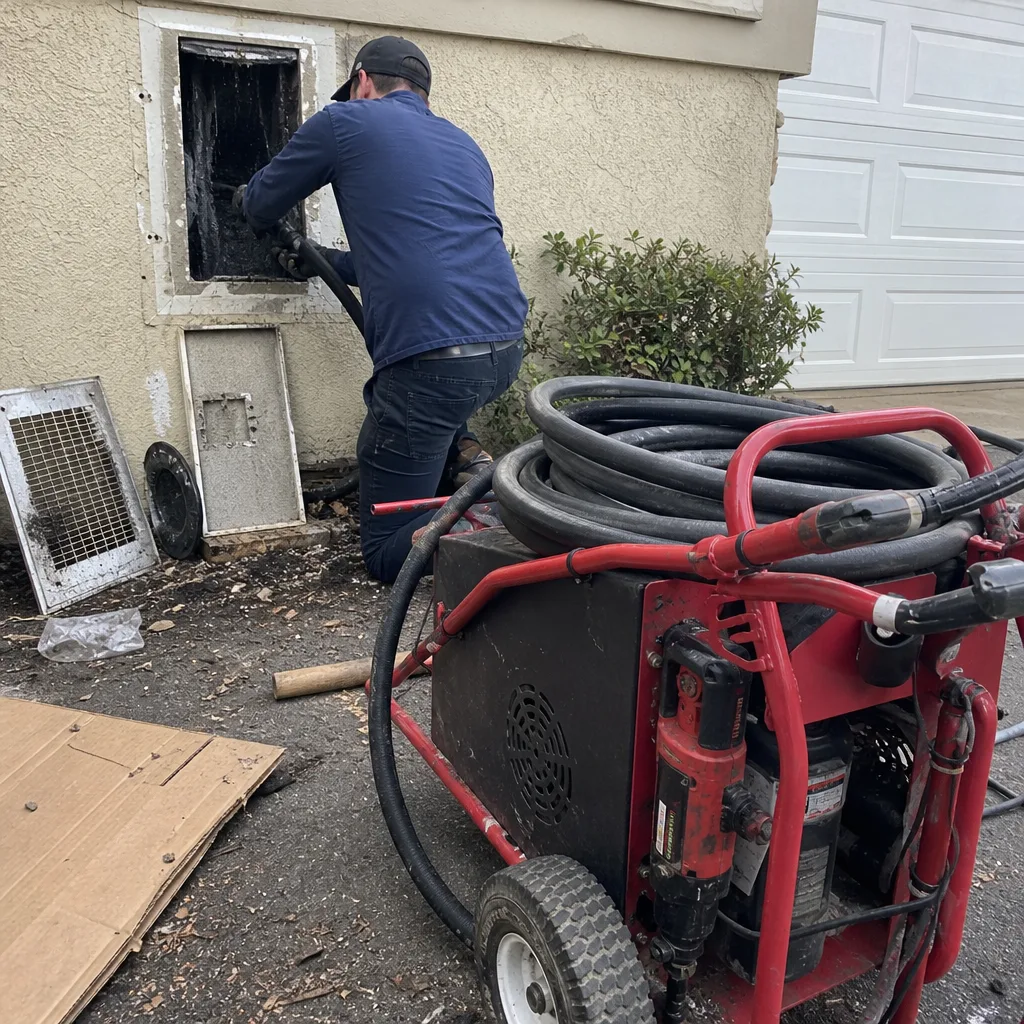 Before
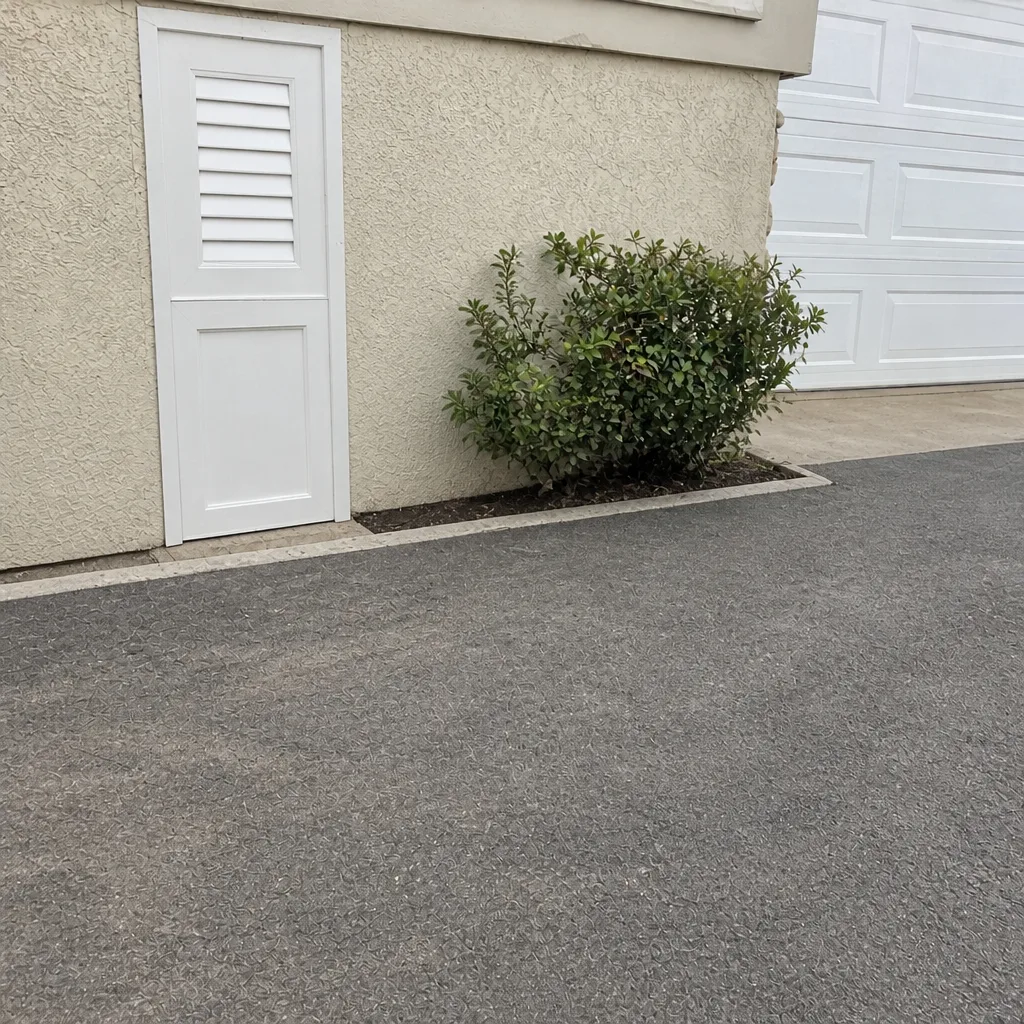 After
When to Call a Professional
Some duct work is homeowner inspection. Some is not. Call a professional when: you see liner deterioration in any accessible duct section, moisture staining appears inside a plenum, the coil photograph from your tune-up is loaded, any renovation involving drywall or sanding happened in the last 12 months, you have two consecutive heavy return-grille wipes, or a household member has a new respiratory diagnosis that raises the stakes on air quality. Also call if your dryer vent isn’t fully clear after you’ve cleaned the outlet flap and lint screen. Air Duct Cleaning West Hills offers free estimates in West Hills; call (855) 658-4109 to book an on-site assessment. Our technicians have up to 15 years of experience and we run the same equipment restoration pros use – Rotobrush agitation, Nikro negative-pressure extraction, and Abatement Technologies HEPA filtration – because the difference between a proper cleaning and a pass with a shop vac is mostly in what’s brought through the door.
Frequently Asked Questions
For most West Hills homes, a professional whole-system cleaning every 3 to 5 years is a reasonable baseline, but that number gives way to a log-based schedule almost immediately. Homes with pets, recent renovations, or asthma and allergy concerns often need cleaning every two years. Households in wildfire-safe zones that log many smoke-event days should track filter loading and plenum inspection results rather than calendar years. Filter changes alone don’t substitute for this – they’re a supporting task, not the main one.
Yes, through return-side leaks and any unsealed plenum joints, and through the fresh-air intake if the system has one. Fine smoke particles behave like dust: they don’t need an open window to find a path. Running the system on recirculate with the windows closed is the right move during a smoke event, but after the event ends, pull the filter and check it, and wipe an accessible return plenum with a light cloth. If the cloth comes back coated, log it as an event trigger for cleaning.
Only if the filter housing is deep enough for it. A 1-inch slot filter at MERV-13 usually restricts airflow more than a MERV-8 does, and that drop in airflow costs you efficiency and can strain the blower. If your system has a deep-pleat 4-inch or 5-inch media cabinet, MERV-13 is usually fine. If it only takes a 1-inch filter and you need high filtration for allergy or asthma reasons, the right fix is a whole-home filtration cabinet upgrade (Honeywell and Aprilaire both make them) rather than forcing a thick 1-inch filter into a slot that wasn’t sized for it.
Typical whole-system cleaning in this market runs in the low-to-mid hundreds of dollars for a standard residential home, and higher for larger homes or those that add sealing, sanitizing, or post-renovation work. The written estimate sets the final price, and we don’t quote per-vent numbers – a per-vent price is what makes coupon quotes look low and final invoices look high. Call (855) 658-4109 for an exact quote; estimates are free. We answer 24/7. Fast dispatch from 7am to 7pm, Sunday through Friday.
Because the tools brought on site and the time spent are different. A cheap quote usually means a broom-and-shop-vac approach: no rotary agitation, no negative-pressure containment, no HEPA filtration during extraction, and no before-and-after photographs of your own ducts. That leaves contamination settled back into the plenum almost as soon as the equipment is packed up. Ask any cleaner what equipment they use and whether they photograph the result. If they can’t answer both, the price difference is explained. Call (855) 658-4109 for a free estimate and we’ll walk you through the equipment we bring, so you can compare apples to apples.
Ask for before-and-after photographs of the returns, plenums, and the interior of at least one supply branch. A professional crew will have those ready without you having to ask. We photograph every job before and after as standard practice, and those photos go into your home’s log so the next visit has a real baseline. Also ask what equipment was used during the job – if the answer isn’t specific to a named system, that’s worth noting. Call (855) 658-4109 to book an assessment and confirm what’s included in writing before any work starts.
The Bottom Line
West Hills duct maintenance is a seasonal protocol, not a calendar of filter changes. Santa Ana wind events, wildfire smoke intrusions, dry heat, and renovation dust are the events that actually drive contamination in this area, and each has a matching inspection task. Build a log that tracks pets, renovation activity, and air quality event days; use the log to trigger cleaning instead of a fixed-year rule; keep filter selection tied to your actual air handler rather than the highest MERV you can find; and treat sealing and sanitizing as the step that makes the cleaning last, not an upsell. When the log says it’s time, get a documented professional cleaning. Our technicians have up to 15 years of experience, and we use Rotobrush rotary brush agitation, Nikro industrial negative-pressure extraction, and Abatement Technologies HEPA filtration because the difference between a real cleaning and a discount job is what’s actually brought on site. Call (855) 658-4109 for a free estimate. We answer 24/7. Fast dispatch from 7am to 7pm, Sunday through Friday.
Written by the team at Air Duct Cleaning West Hills.