
Last updated November 22, 2026
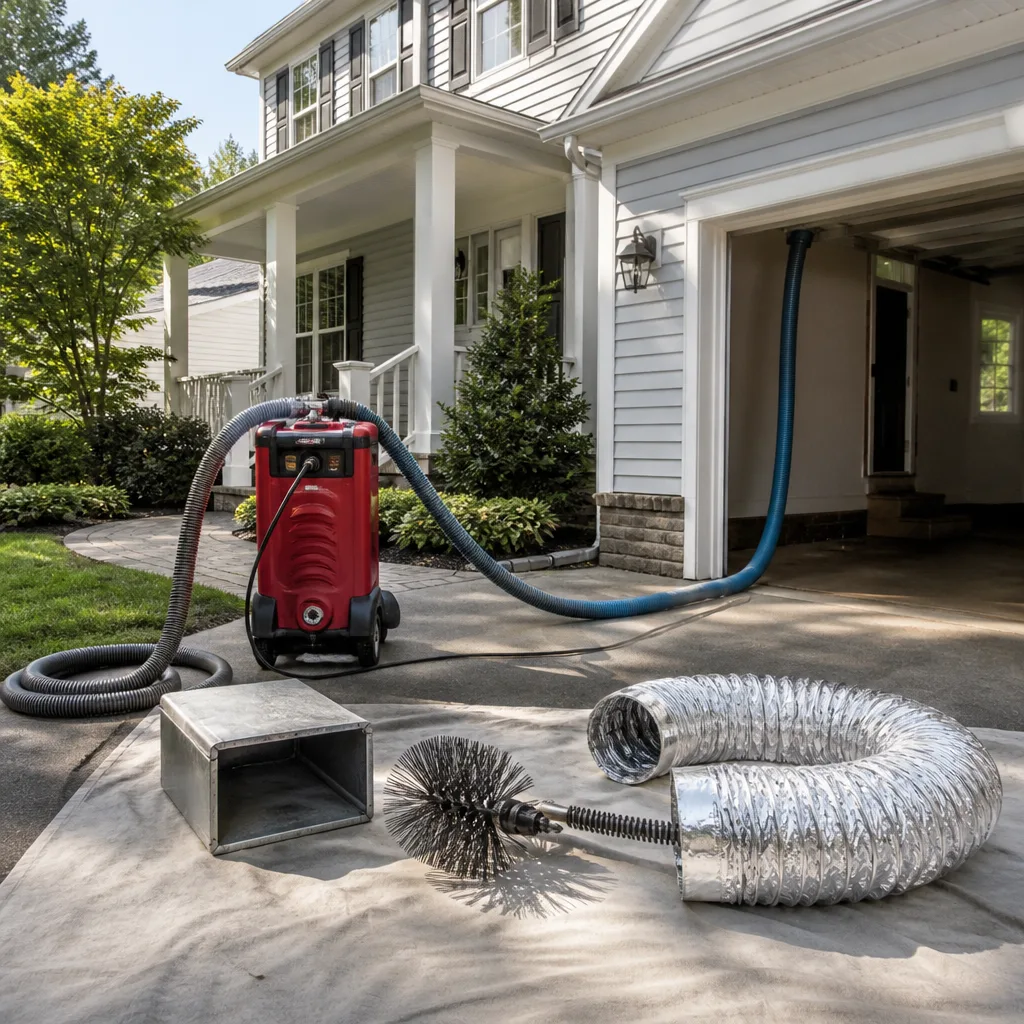 Whole-home duct cleaning
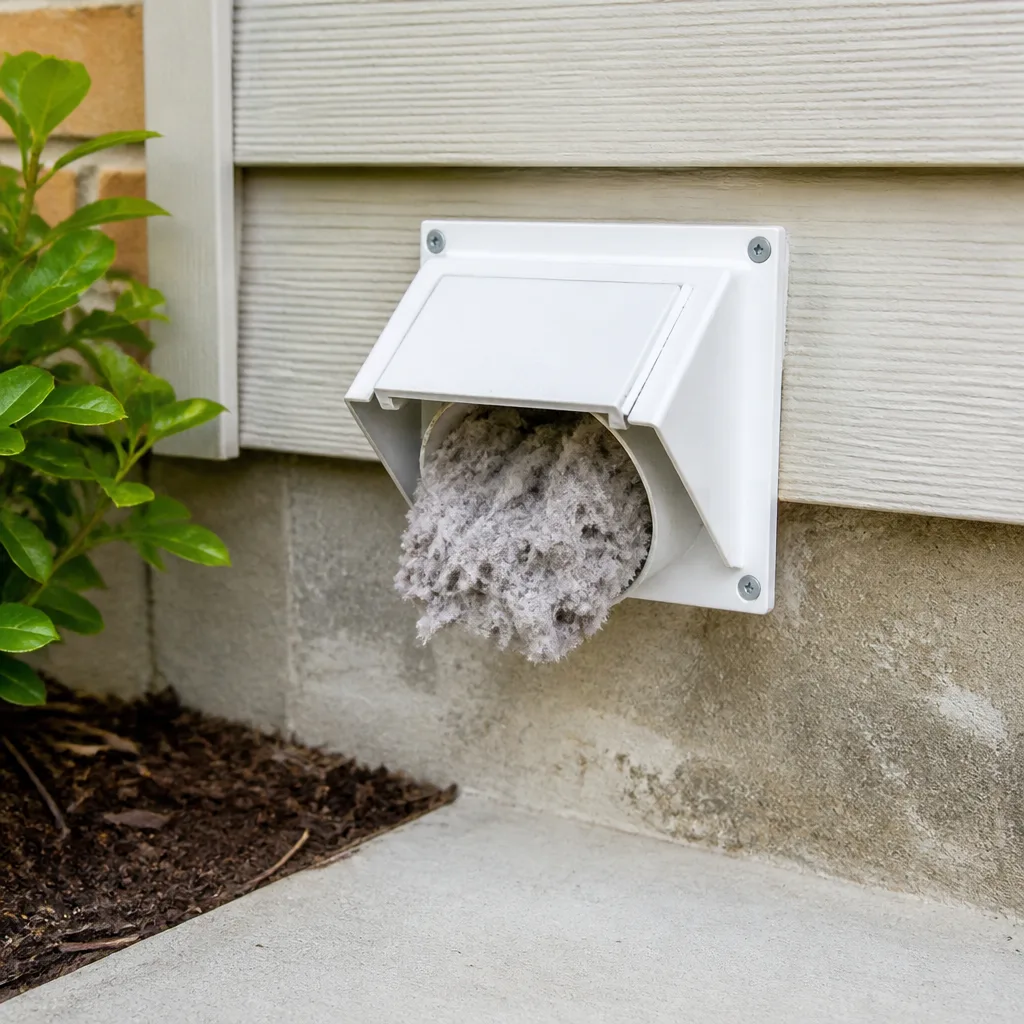 Dryer vent cleaning
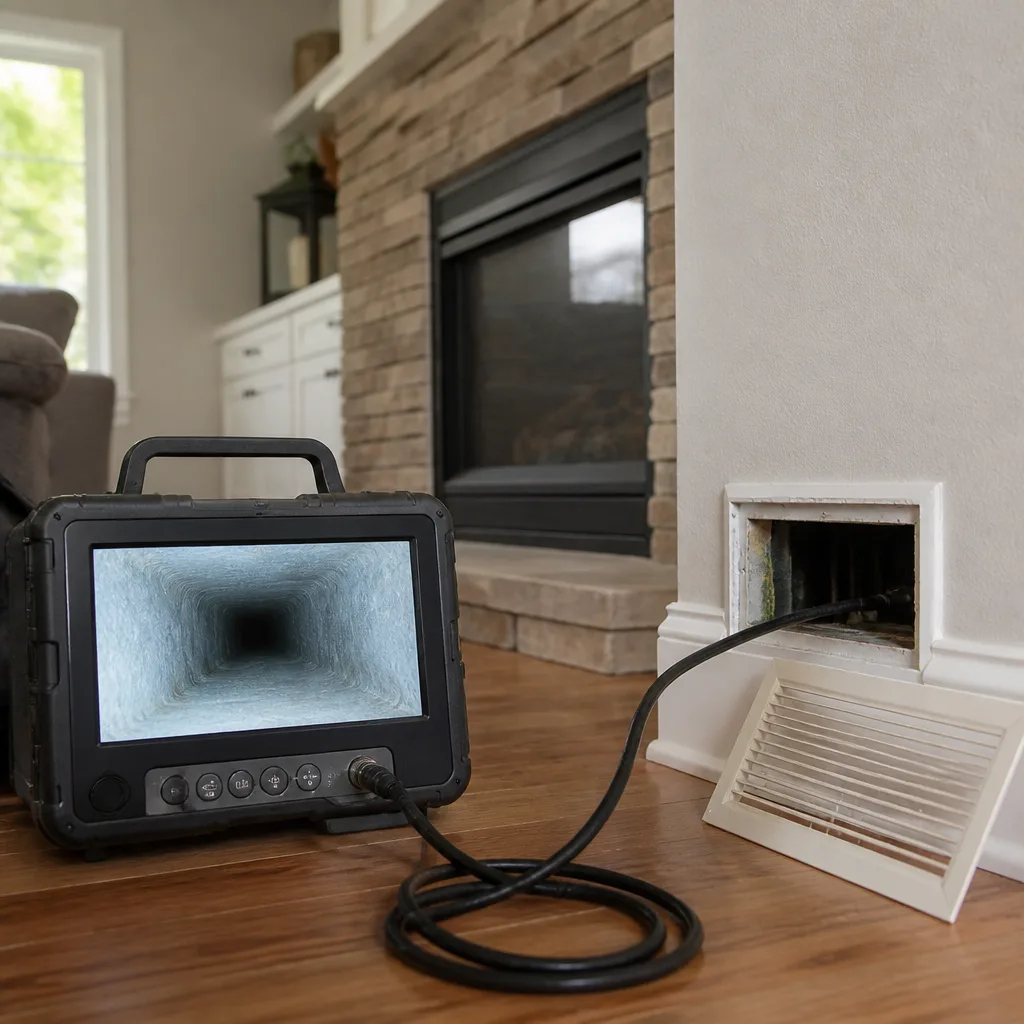 Camera inspection
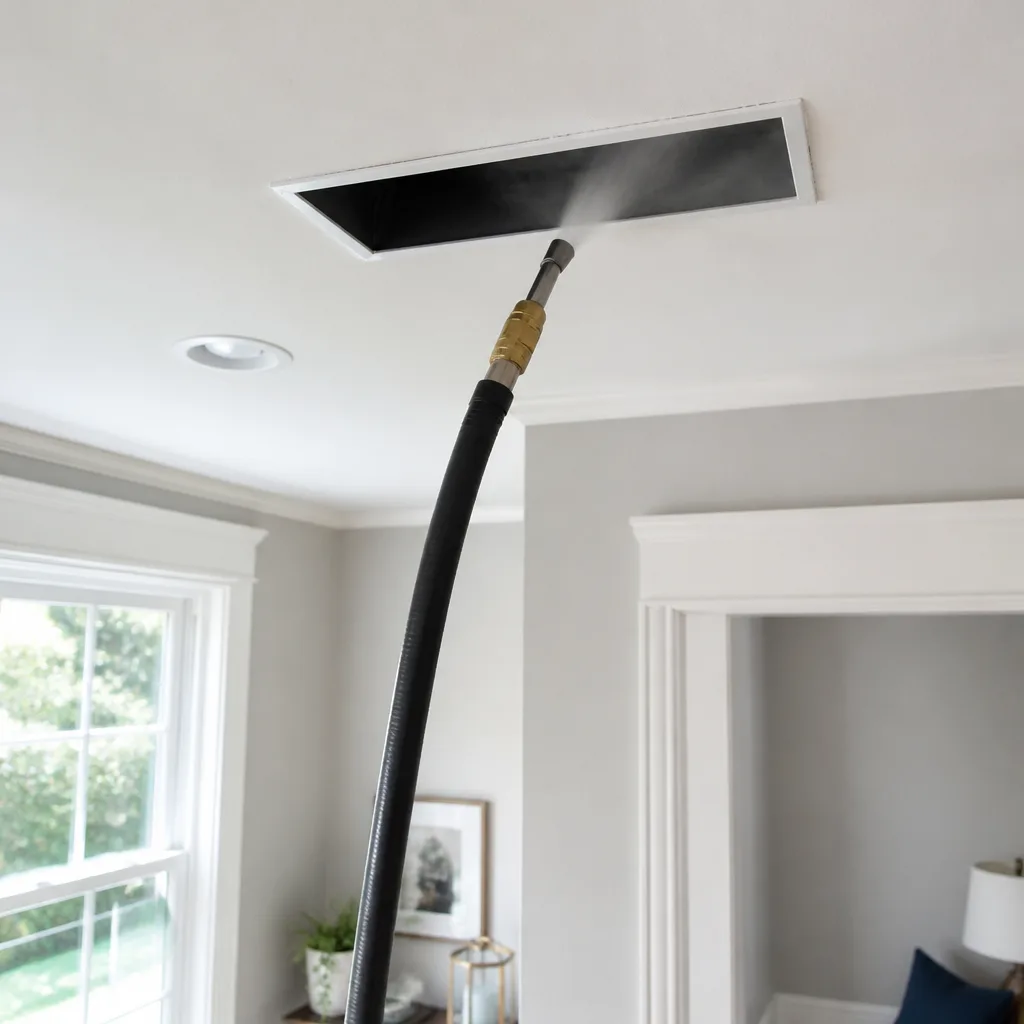 Sanitizing & deodorizing
Whole-system duct and dryer vent check with before-and-after photos - you see exactly what came out of your vents
That "$99 whole-house special" is a bait ad - the real number appears once they are in your hallway, or the "clean" is a shop-vac at the register. We photograph the inside of your ducts before and after instead.
The Complete Guide to Air Duct Cleaning in West Hills
Most homeowners assume a duct cleaning is either done or not done. In practice, the more useful question is whether it was done for the ducts you actually have. A significant share of West Hills homes went up between 1965 and 1985, back when duct board and flex duct were installed without the sealing standards in place today. That means the gaps where debris settles and re-enters the living space often sit outside what a quick register-to-register pass ever touches. This guide covers how West Hills construction, hillside exposure, and Santa Ana wind loads shape what’s really inside your ductwork, how professional source removal compares to a portable vacuum, and how to judge whether a cleaning will hold.
Quick Answer
Air duct cleaning in West Hills means removing accumulated dust, ash, and construction particulate from the whole system under negative pressure, not just vacuuming the registers you can see. A complete job covers supply trunks, return plenums, the air handler coils, and the drain pan, with pre-job inspection and post-job documentation. Homes built in the 1965-1985 window usually need sealing work alongside cleaning, because unsealed duct board and flex joints let contamination back in.
Styles & brands we work with
- Whole-home duct cleaning
- Dryer vent cleaning
- Camera inspection
- Sanitizing & deodorizing
Table of Contents
- Why West Hills Ductwork Collects More Than You’d Expect
- Negative-Pressure Source Removal vs. Portable Vacuums
- What a Full-System Inspection Actually Covers
- How Duct Material and Age Change the Method
- How a Complete Duct Cleaning Works, Step by Step
- Red Flags That a Cleaning Wasn’t Complete
- What to Do After the Cleaning
- Common Mistakes to Avoid
Why West Hills Ductwork Collects More Than You’d Expect
West Hills sits at the western edge of the San Fernando Valley, pushed up against the Santa Susana Pass. That geography matters for your air quality. When Santa Ana winds run through the pass, they carry fine desert particulate and, in wildfire years, ash straight into the valley. Coastal LA homes get some of this filtered by distance and marine air; West Hills sits closer to the source and takes it more directly. Those fine particles are small enough to bypass a standard filter and settle into return plenums where you’ll never see them.
Layer on top of that the housing mix. The tract homes built through the 1960s, 70s, and early 80s were typically fitted with duct board and early flex duct, both of which are more prone to internal shedding and joint gaps than sheet metal. Hillside properties add another wrinkle: longer duct runs, more elevation changes, and returns that pull from rooms closer to the exterior envelope, which is where particulate loads first accumulate. And any home that’s been through a remodel or an addition has likely pushed construction dust into the system, especially if the work happened with the HVAC running.
The practical result is that the typical West Hills home carries three overlapping particulate profiles:
- Wildfire ash and smoke residue from Santa Ana wind events, which is fine, sticky, and hard to remove without agitation.
- Construction dust from remodels, additions, and nearby development, which is heavier and settles into low points and plenum floors.
- Desert and valley particulate carried on dry winds through the pass, which accumulates seasonally and gets pulled in through returns and any unsealed joint.
Each of these behaves differently inside ductwork. Ash clings; construction dust piles; desert particulate drifts. A cleaning method that only addresses one of the three leaves the others in place.
Negative-Pressure Source Removal vs. Portable Vacuums
The single biggest quality difference between duct cleanings is whether the work is done under negative pressure. Negative-pressure source removal means the system is put under vacuum at one point (typically the main trunk) while a technician agitates the interior surfaces from another. Contamination is pulled toward the vacuum and captured, rather than being knocked loose to settle back into the living space. This is the method that restoration and remediation professionals rely on, and it’s the one the industry treats as the standard for a real cleaning.
Portable shop-vac-style systems work differently. They rely on a small vacuum and a hose at each register, often with a spinning brush. They can pull visible dust from the register and the first few feet of branch duct, and for some light maintenance situations that may be enough. What they can’t do is maintain system-wide negative pressure, which means dislodged debris can drift back into rooms, and the deeper trunk lines and plenum floors stay untouched. On older West Hills systems with unsealed joints and internal shedding, this matters a lot: the debris that re-deposits is often the finest, most respirable fraction.
Professional-grade equipment closes that gap. Rotary brush systems like those from Rotobrush agitate duct walls to break loose adhered material, industrial vacuums like Nikro provide the sustained suction needed to pull it out, and HEPA filtration units from Abatement Technologies capture fine particulate at the exhaust so it doesn’t exit into your home. This combination is what a source-removal clean actually looks like in practice, and it’s the difference between a visible improvement and a verifiable one.
If you’re researching the service, the question to ask any provider is simple: what’s your vacuum source, and can you show me the pre- and post-cleaning photos?
What a Full-System Inspection Actually Covers
An inspection that starts and ends at the register isn’t an inspection. The registers are the visible end of a system with several distinct zones, and each one accumulates different material. A thorough inspection covers:
- Supply trunks. The main runs that distribute conditioned air. These collect particulate from the air handler forward, and any internal damage or joint separation shows up here.
- Return plenums. The single biggest collection point in most West Hills homes. Everything the return pulls from the living space lands here first, so it’s often the dirtiest part of the system and the one most often skipped.
- Air handler coils. The evaporator coil is wet during cooling season, which makes it a natural capture point for dust and microbial growth. Coated coils reduce efficiency and restrict airflow.
- Drain pans. Standing moisture plus dust equals biological growth, and a pan that isn’t cleaned can seed the whole system repeatedly.
- Branch ducts and boots. The runs to individual registers, checked for gaps, disconnected joints, and internal debris.
The inspection should include camera documentation inside the trunk and plenum. That footage is what tells you whether a cleaning is even the right first step, or whether you’re dealing with a duct repair or sealing issue first. In our experience, homes in the 1965-1985 window routinely have joint gaps on duct board and flex runs that a cleaning alone won’t fix: the ducts come out clean, then leak air and particulate back in within months.
If a provider can’t tell you what your plenum looks like before they start, the inspection is incomplete.
How Duct Material and Age Change the Method
Not all ductwork tolerates the same cleaning approach. Using the wrong method on the wrong material can damage the ducts and shorten how long a cleaning lasts. Here’s how the three main materials common in West Hills homes differ.
- Flex duct. Flexible, insulated, and prone to sagging. The interior plastic liner can develop tears where debris collects, and the wire helix inside can trap material at low points. Cleaning requires gentler agitation than sheet metal, and any torn liner needs to be repaired or the run replaced, not just cleaned.
- Sheet metal. Rigid, durable, and the easiest to clean thoroughly, since rotary brushes can work the full surface. The weak points are the seams and connections, which are often unsealed and leak air into unconditioned space.
- Duct board. Rigid fiberglass board with a foil facing, common in older tract homes. The interior surface is rougher and holds onto particulate more tenaciously, and edges can fray over time. Cleaning requires care to avoid abrading the facing, and any crumbling or water-damaged sections need to be replaced rather than cleaned.
Duct age matters as much as material. A duct board system installed in 1975 and never sealed has 50 years of joint wear; the cleaning will remove what’s accumulated, but the leaks will keep letting particulate in. That’s why the finish line for older West Hills homes is usually clean plus sealed, not just clean. A realistic expectation is that cleaning restores internal cleanliness, and duct repair or sealing is what keeps it that way. Skipping the sealing step is how a “completed” cleaning becomes obsolete in six months.
If your system involves a mixture of materials, which is common where additions were made, the method has to be adapted run by run. That’s a conversation worth having before the work starts, not after.
How a Complete Duct Cleaning Works, Step by Step
A well-run duct cleaning follows a sequence. The order matters, because each step sets up the next. Here’s what a complete job looks like from start to finish.
- Pre-job inspection and documentation. Cameras go into the trunk, plenum, and a sample of branches. The technician records what’s there so you can compare against the post-cleaning state.
- System isolation and sealing. Registers and any open joints are covered or sealed so contamination can’t escape into the living space during cleaning.
- Negative-pressure setup. A HEPA-filtered vacuum or truck-mounted unit connects to the main trunk or plenum, putting the whole system under continuous negative pressure.
- Agitation and source removal. Rotary brush agitation (from equipment like Rotobrush) works loose adhered material on duct walls and internal surfaces while the vacuum pulls it out. Each run is worked systematically.
- Air handler and coil cleaning. The evaporator coil and blower are cleaned separately, since these components collect a different profile of debris and often support microbial growth. Drain pans are cleaned and checked for flow.
- Sanitizing (where appropriate). A sanitizer is applied to control microbial growth on internal surfaces. Protection products such as Guardsman’s can extend that result beyond the visit.
- Post-job documentation and airflow check. Cameras go back in. Airflow at representative registers is measured so you have evidence of the result, not just a verbal “all done.”
- Optional repair and air quality upgrades. Any gaps, separations, or damaged runs surfaced during the job get addressed through duct repair and sealing. Whole-home filtration upgrades from Honeywell or Aprilaire can be discussed if the job reveals a filtration gap.
In West Hills, the coil and drain pan checks are worth treating as non-negotiable. A clean duct system feeding a dirty coil just recirculates the same load. The full-system setup is why a five-service specialist operation is a better fit for most homeowners than a duct-only cleaner: cleaning, HVAC cleaning, and duct repair and sealing are handled by the same team, so nothing falls between vendors.
If you’re also thinking about your dryer vent, that’s a separate job on its own service line, but it’s often worth doing at the same time as the duct cleaning so a single visit covers both. Dryer vents are a leading cause of residential fires and are routinely ignored by single-service duct cleaners.
Red Flags That a Cleaning Wasn’t Complete
The hard part about duct cleaning is that a bad job looks exactly like a good one from inside the house. The air gets back on, nothing’s obviously broken, and you have no way to verify from the register what happened inside the trunk. Here are the signals that the job missed something important.
- No pre-job inspection. If the technician arrives and starts hooking up without putting a camera in the plenum first, they don’t know what they’re working with. That’s a sign the cleaning is going to be a standardized pass, not a diagnosis.
- No camera documentation. Before and after footage is the one piece of evidence that tells you what actually changed inside your system. A provider who can’t produce it can’t prove the work happened where it matters.
- No post-job airflow reading. Airflow at the registers should be checked after cleaning to confirm improved performance. Without a reading, you’re taking the result on faith.
- Register-only work. If the audible sound of the job is only at registers and not at the main trunk or plenum, the deeper system is probably untouched. Returns are where most of the accumulation is, and they’re the easiest thing to skip.
- No coil or drain pan service. A clean duct system feeding a dirty coil is half a job. If the coil wasn’t touched, the system is recirculating the same contamination load.
- No discussion of sealing or repair. On older West Hills systems, cleaning without sealing just resets the clock. A provider who doesn’t raise duct repair or sealing, especially on duct board and flex runs, isn’t addressing the root cause.
- No estimate in writing. The price should be set per job, in writing, before work starts. A verbal price that changes when the technician is on site is the oldest pattern in this trade, and it’s the reason the flat-price-per-system estimate matters.
The common thread: verifiable work has evidence attached. Any job that can’t produce evidence at each of those checkpoints left something unresolved.
What to Do After the Cleaning
The cleaning is the reset. What happens in the weeks and months after decides whether it holds. Here’s how to give a West Hills cleaning a long life.
First, replace the filter with a properly sized one and match the MERV rating to your system’s spec. A filter that’s too restrictive chokes airflow; one that’s too loose lets particulate through. Most residential systems are designed around a specific MERV range, and the air handler documentation carries that number. Getting it right is a small thing with an outsized effect on how fast the ducts reload.
Second, walk the duct run and check for gaps or disconnected joints, especially on flex and duct board runs. If you saw a joint issue in the pre-job footage, get the repair scheduled rather than waiting for a symptom. Sealing is cheap compared to re-cleaning a system that never got sealed.
Third, address the source. If a remodel is coming, seal off the work zone and shut the system down during the dustiest days. If Santa Ana season is ahead, closing windows on those high-wind days does more for your ducts than any filter. And if your home sits on a hillside with exterior-facing returns, check those registers periodically. They load faster.
Fourth, think about filtration. If your system only has a single 1-inch filter slot, whole-home filtration from Honeywell or Aprilaire systems can meaningfully reduce the particulate load between cleanings. That’s not a cleaning upgrade; it’s a separate air quality decision that changes what accumulates upstream. Worth a conversation if allergies, asthma, or recent construction are part of the picture.
Finally, watch for the signals that mean it’s time again: visible dust at the registers shortly after a clean, a musty smell when the system starts, or increased allergy symptoms during the heating and cooling seasons.
Common Mistakes to Avoid
- Buying the lowest quote without asking what it includes. A cheap price usually means register-only work with no pre-job inspection and no camera documentation. Ask for the scope of work in writing before you agree to anything.
- Assuming a cleaning will fix a sealing problem. Cleaning removes what’s accumulated; it doesn’t fix the gaps that let particulate back in. On older duct board and flex runs in West Hills, sealing is part of the job, not an upsell.
- Skipping the coil and drain pan. This is the most common half-job. A clean duct system behind a dirty coil doesn’t improve air quality the way it should and can drive up energy use.
- Letting the HVAC run through a remodel. Construction dust ends up in the return plenum within hours. Shut the system down and seal the work zone, then clean afterward.
- Ignoring the dryer vent. Duct cleaning and dryer vent cleaning are different services, and the vent is a real fire risk that many duct-only providers don’t handle. If a provider doesn’t offer dryer vent cleaning, that’s a gap in coverage.
- Waiting for a visible symptom. Ducts rarely show a problem at the register. Most of what accumulates lives in the plenum and returns where you can’t see it. A scheduled inspection every few years, or after a major remodel, is more useful than waiting for dust to bloom.
- Accepting a verbal price that changes on site. The estimate should set the price, and the work should match the estimate. If the number moves once the technician is inside, that’s the pattern that makes this trade hard to trust.
See the difference
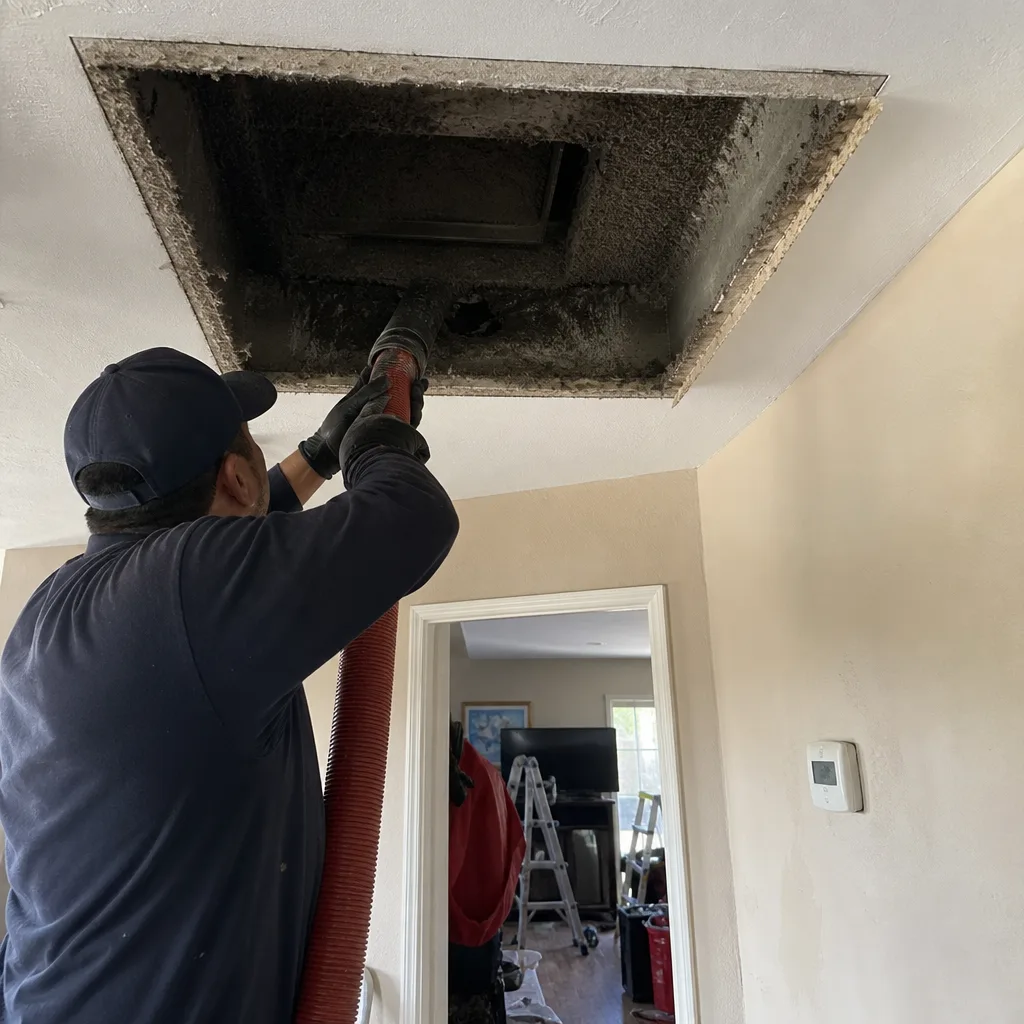 Before
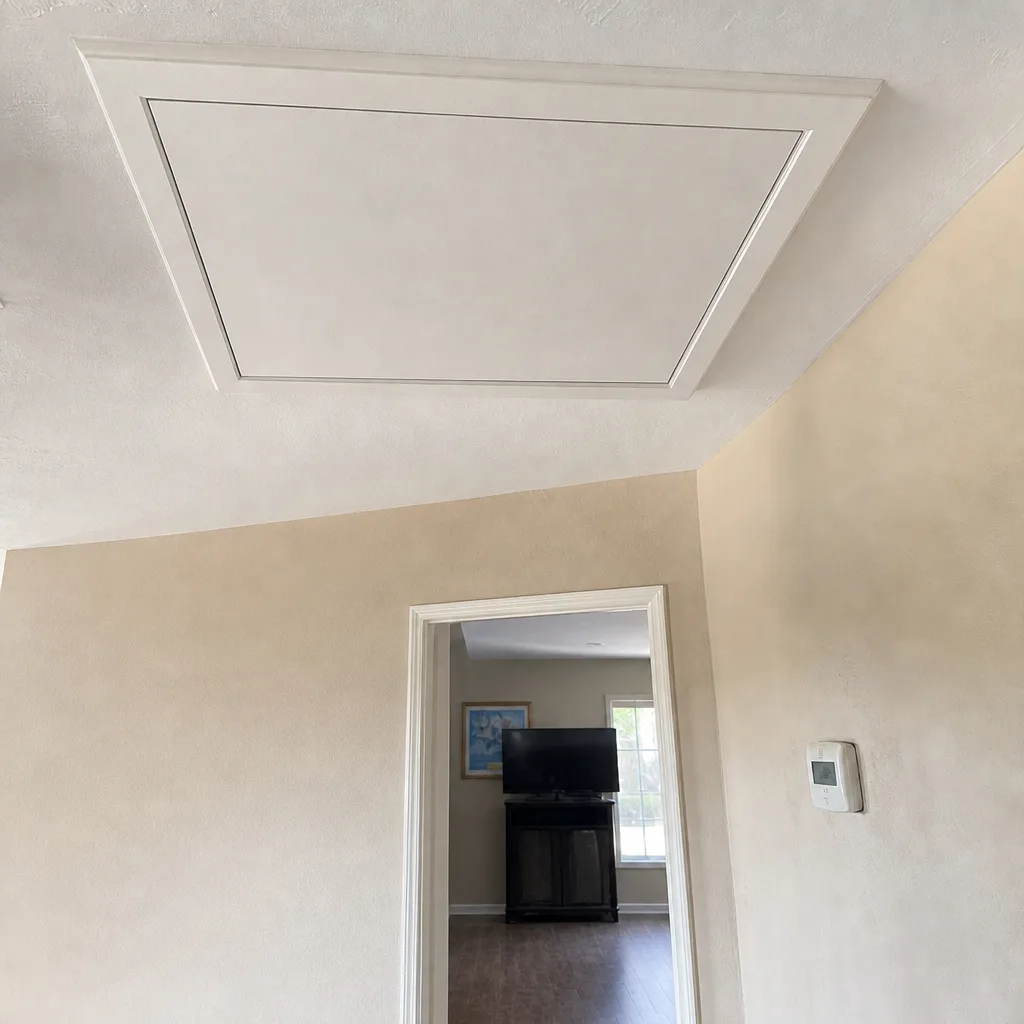 After
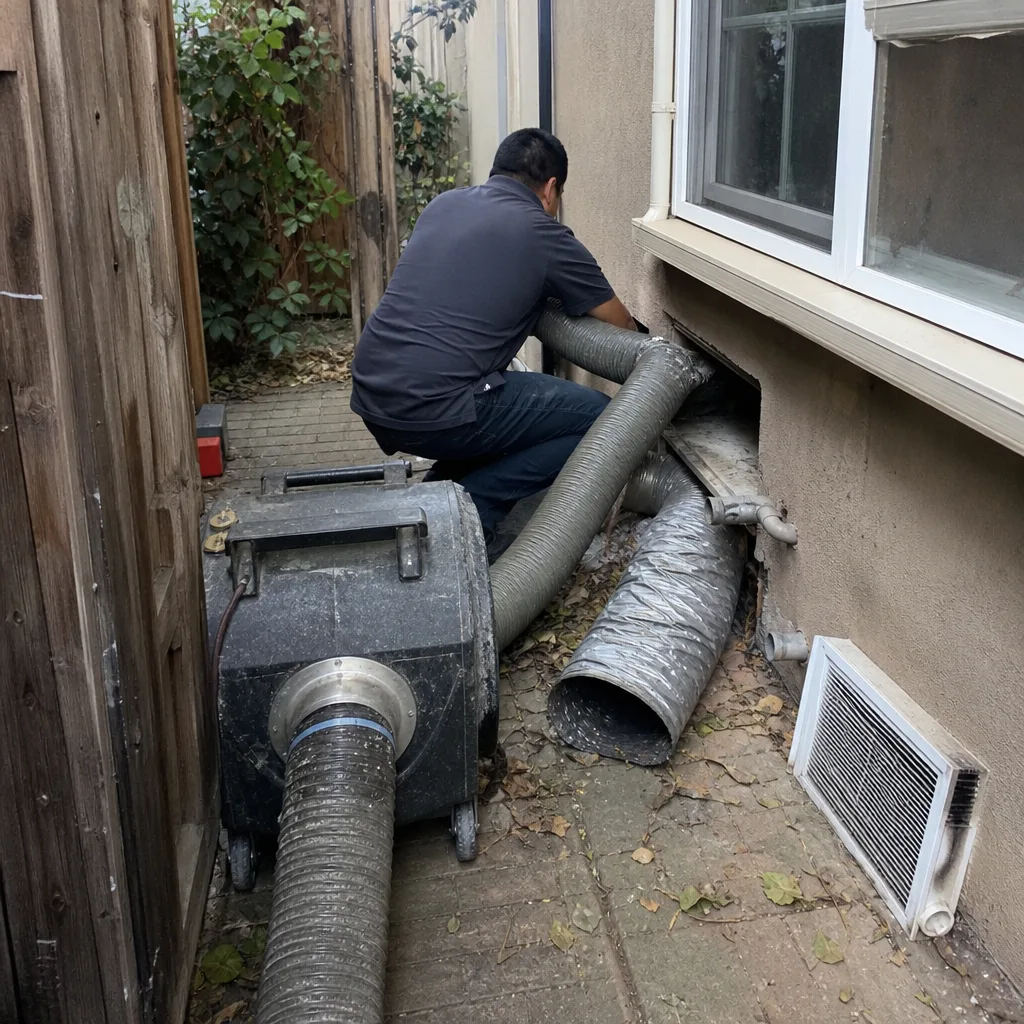 Before
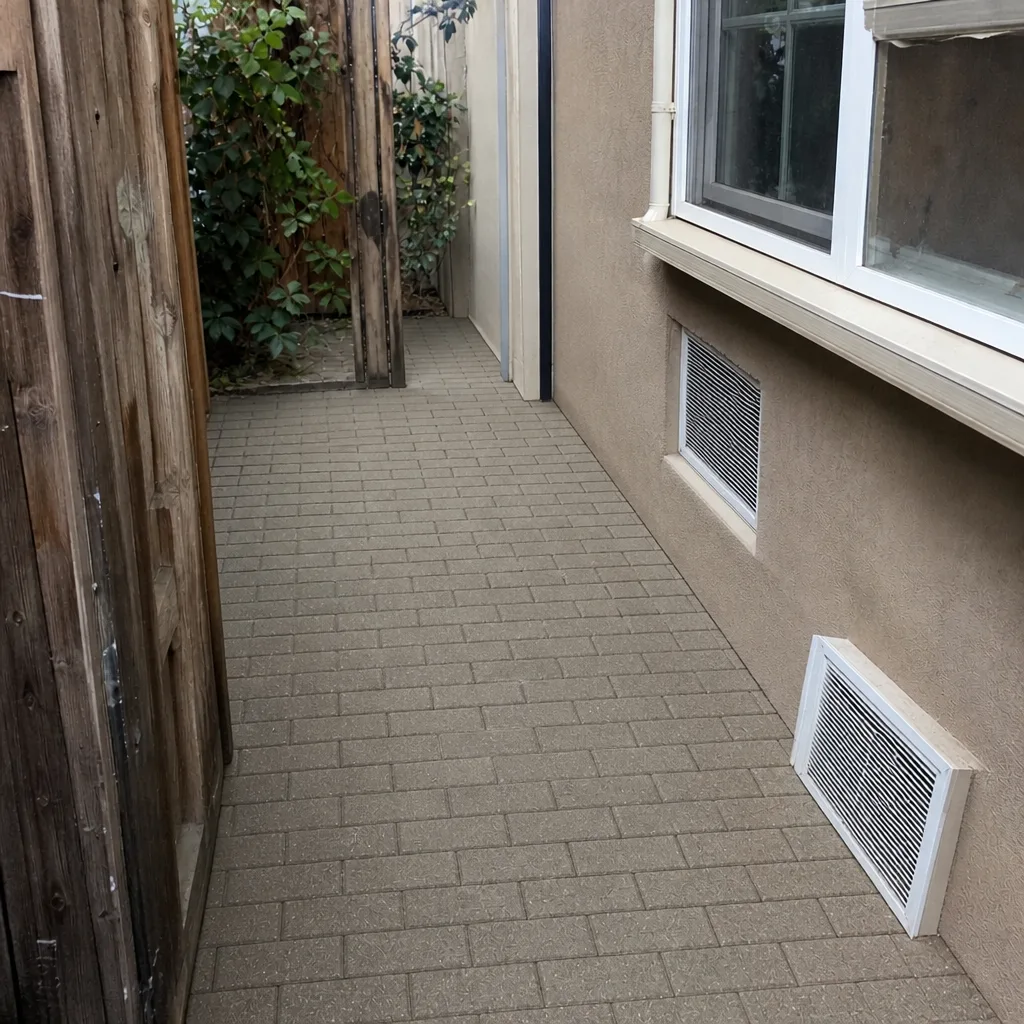 After
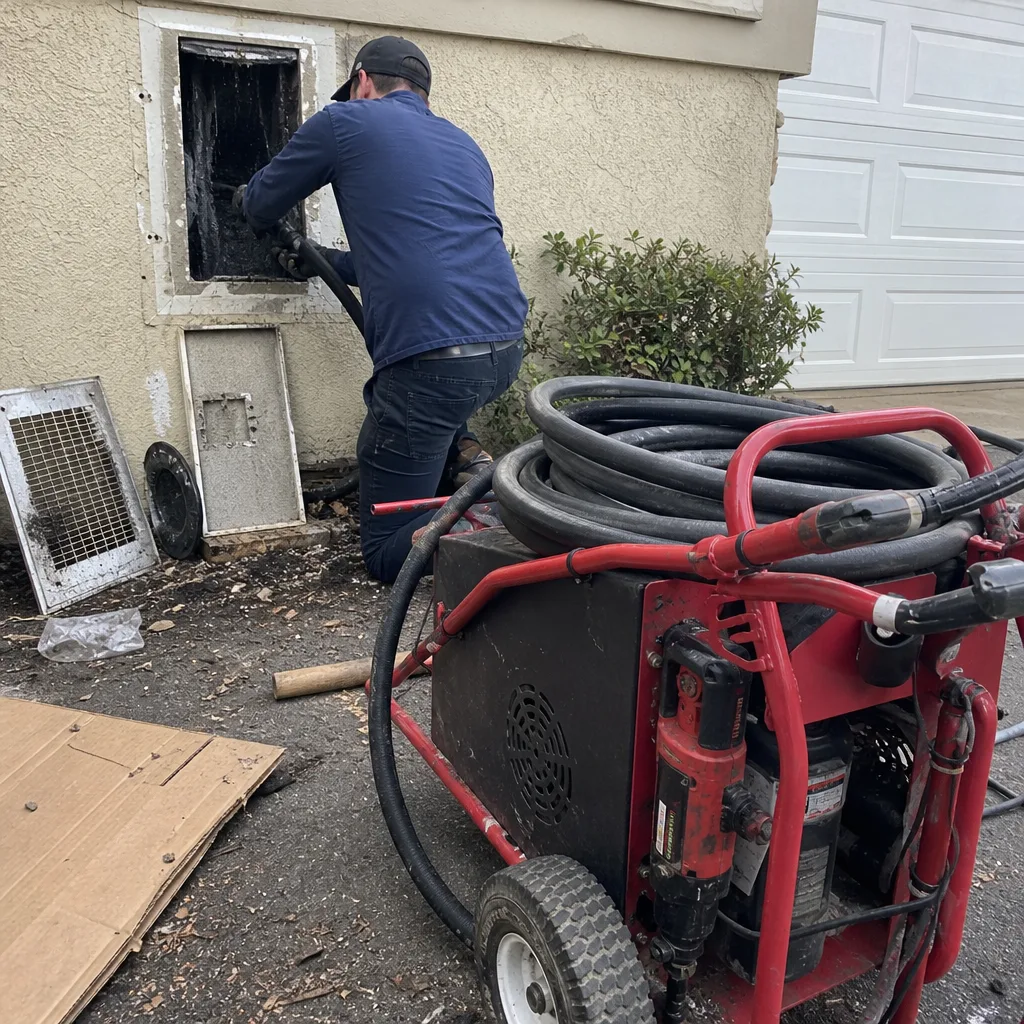 Before
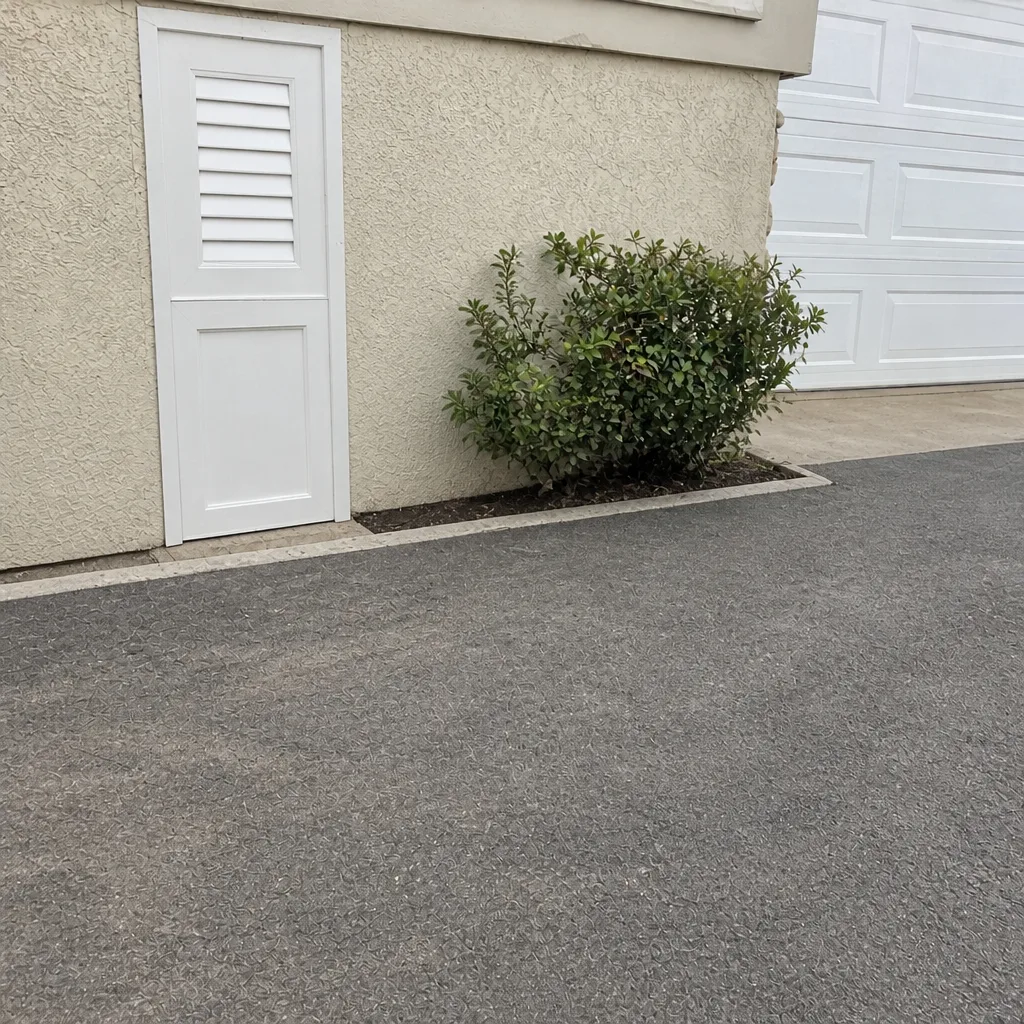 After
When to Call a Professional
Not every home needs a cleaning on day one. The clear cases are recent construction or a remodel, a system you can’t remember ever being cleaned, a musty smell when the air comes on, visible dust at the registers shortly after a filter change, or increased allergy symptoms in the household. Homes with duct board or early flex duct installed before the 1980s are a strong case for an inspection regardless of symptoms, because the sealing question matters more than the dust count. And if a provider can’t show you pre-job inspection footage or a written estimate before starting, call someone who can.
Air Duct Cleaning West Hills offers free estimates in West Hills. Call (855) 658-4109. We answer 24/7. Fast dispatch from 7am to 7pm, Sunday through Friday. The price is set per job by the written estimate, and the local pro we connect you with is licensed and insured as their state requires.
Frequently Asked Questions
Air duct cleaning in West Hills is priced per system, not per vent, so what you pay depends on system size, duct material, and whether sealing or repair is needed alongside the cleaning. A written, flat estimate sets the final price before work starts, and any reputable provider will put it in writing. Call (855) 658-4109 for an exact quote. Estimates are free.
Lower quotes usually reflect a smaller scope: register-only vacuuming with a portable unit instead of full negative-pressure source removal, and no pre-job inspection, camera documentation, or coil service. The cleaning may be real, but it covers a fraction of the system. Ask any provider what equipment they use and whether they document the before and after. Call (855) 658-4109 if you want to compare scopes side by side.
You should see camera footage of the trunk and plenum before and after, and an airflow reading at representative registers once the job is complete. Those two pieces of evidence tell you what changed inside the system you can’t see. A provider who skips both is asking you to take the result on faith. Call (855) 658-4109 to see what documented work looks like.
For most homes, every few years is enough, but the interval depends on what’s happening in the home. A remodel, a wildfire season that pushed ash through the valley, a new pet, or a household with allergies can all shorten the interval. West Hills homes near the Santa Susana Pass corridor tend to load faster than homes further from the pass. Call (855) 658-4109 and we’ll help you think through the right cadence for your system.
Yes, but the cleaning is only half the job on a home that age. Duct board and early flex duct from that era were installed without today’s sealing standards, so joint gaps will let particulate back in after a cleaning if they aren’t addressed. The finish line is clean plus sealed. Call (855) 658-4109 and ask for an inspection that covers both.
Yes. Duct cleaning and dryer vent cleaning are separate services, but they’re often scheduled together because both are part of a complete air quality picture. Dryer vents are a leading cause of residential fires, and most duct-only providers don’t handle them. Call (855) 658-4109 to book both in one visit.
The Bottom Line
The quality of a duct cleaning in West Hills is decided by a few things: negive-pressure source removal, a full-system inspection that includes the trunk, plenum, coil, and drain pan, and the sealing work that keeps a cleaning from going stale on an older system. Homes built from the 1960s through the early 1980s are the ones where this matters most, because their duct board and flex runs were installed before modern sealing standards. Add local particulate loads from the Santa Susana Pass and wildfire seasons, and the case for a documented, whole-system clean gets stronger. If your provider can’t show you the inside of your plenum before and after, they haven’t shown you anything yet.
Ready to look inside your system? Call Air Duct Cleaning West Hills at (855) 658-4109 for a free estimate on air duct cleaning. We answer 24/7. Fast dispatch from 7am to 7pm, Sunday through Friday. One flat price per system, agreed before work starts, with before-and-after photos of your own ducts and a satisfaction guarantee. Our technicians have up to 15 years of experience, and the local pro we connect you with is licensed and insured as their state requires.
Written by the team at Air Duct Cleaning West Hills.