
Nikro Air Duct Cleaning in West Hills: A Homeowner’s Guide
A Nikro machine on a job site doesn’t automatically mean a Nikro-quality result. The equipment is built for negative-pressure source removal, and that method only works when the crew sets it up properly: sealed containment, isolated branches, the right contact tools. A vacuum sitting in a hallway is just a vacuum. Below we explain what Nikro units actually do inside your ductwork, how to tell whether a crew is running one correctly, and what the machine can’t fix on its own. If you’d rather leave it to trained hands, call (855) 658-4109.
What does “negative-pressure source removal” actually mean?
Negative-pressure source removal means capturing dust and debris at the point where it’s dislodged and pulling it into a sealed collection system, so the particles never enter the room. A machine at one end of the ductwork pulling suction is only half the method. The other half is pressure control: the work area is closed off so the system runs at lower pressure than the room, and every opening stays sealed while the ducts are agitated.
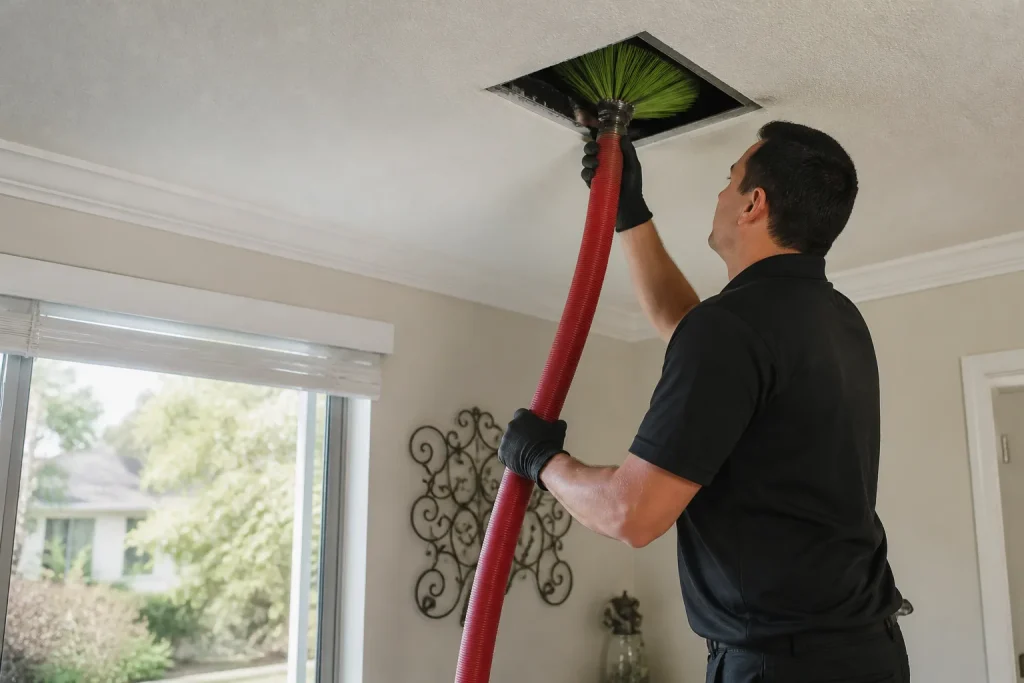
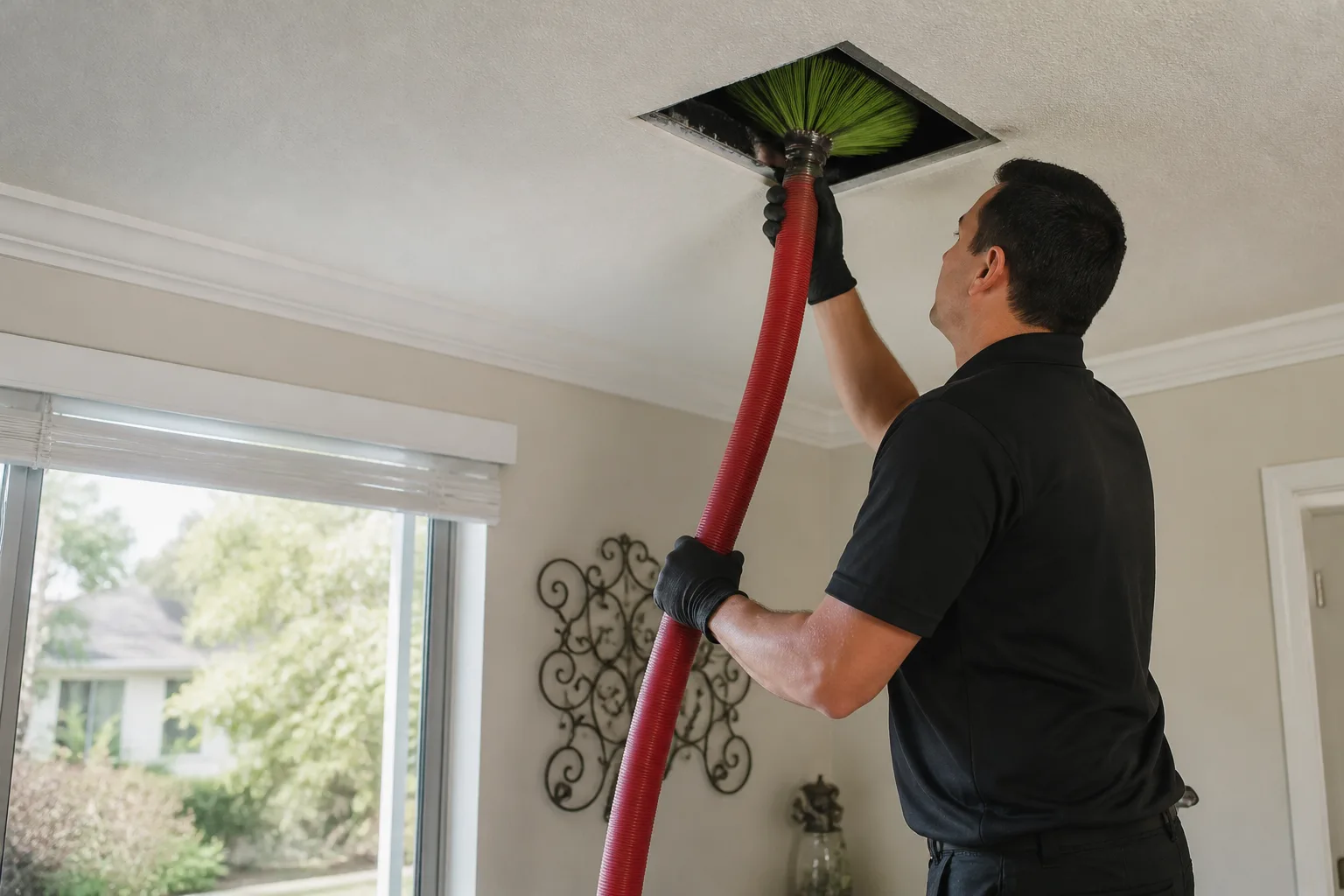
Nikro units are engineered around that idea. Think of them less as giant shop vacuums and more as the engine of a containment zone. When a technician cuts an access opening in West Hills, that hole becomes the only place air enters the system, and the Nikro pulls everything through a HEPA-filtered path instead of blowing it into the closet or hallway. In our experience, the visible difference at the end of a job is what the collection bag holds and what the return air grille looks like, not how loud the machine was.
That’s also why the machine brand alone tells you very little. A crew can own the right unit and still skip the containment, which turns a source-removal job into a dust redistribution job with extra steps.
Why portability matters in West Hills homes
Most West Hills houses run interior air handlers, usually tucked in a hallway closet, a utility space, or an attic platform rather than a garage. That layout is a practical problem for truck-mount systems, which need hose runs from a driveway or street to reach the ductwork. Long hose runs lose suction, and every added length is one more connection that can leak or drag through a living room.
Nikro’s portable electric units change that equation. They roll to the air handler, sit close to the access point, and run on standard power. For a single-family home in West Hills with a central closet unit, that means no hose snaking through the front door and no drop in pressure over distance. It also means the technician can work in tighter spaces without improvising the setup.
Portability isn’t a convenience feature. It’s what lets the negative-pressure method stay intact in homes that weren’t designed for a truck to park next to the ductwork. When the machine is close to the return plenum and the supply branches, isolation and sealing get easier to do properly.
How do you verify a crew is using Nikro equipment correctly?
You verify it by watching the setup, not the logo. Ask to see the machine, then ask a few pointed questions about what the technician is doing with it. These are the checks that separate a real source-removal job from a padded invoice:
- Collection bag placement. The bag or drum should be attached and sealed to the machine before work starts, with nothing taped loosely or left open. If you can see dust escaping around the connection, the containment is already broken.
- Branch-by-branch isolation. A technician should close off or block unworked branches so the suction concentrates where the agitation is happening. Running the machine with every vent open spreads the pull thin and leaves debris behind in the runs farthest from the unit.
- Access openings done deliberately. Expect small, measured cuts at the plenum and along long runs, sealed afterward. Random slits or openings near a return grille in a hallway don’t count as proper access.
- Contact cleaning tool selection. Rotary brushes, air whips, and hand tools each suit different duct materials. A crew that uses one tool on every surface isn’t matching the tool to the ductwork.
- Before-and-after photos. Ask for them inside the ducts, not just of the room afterward. A crew confident in its setup takes those photos without being asked.
In our experience, the questions do more work than the inspection. A technician who understands the system can explain the isolation plan and the tool choice in plain language. One who can’t is probably running the machine on name value.
What Nikro equipment can’t do on its own
A Nikro unit cleans ductwork. It doesn’t remediate mold, seal leaking joints, or clean an evaporator coil. Those are different problems with different tools, and a homeowner in West Hills should know where the machine’s job ends.
Mold growth inside a duct system needs moisture control and a sanitizing step beyond basic cleaning. Duct sealing requires mastic or foil tape applied to the actual leak points, because no amount of suction fixes gaps that keep pulling attic or crawlspace air into your supply runs. Coil cleaning means opening the air handler cabinet and treating the coil directly. Nikro makes none of that happen by itself.
This is where a full-system approach matters. We clean with Rotobrush agitation and Nikro negative-pressure extraction, then move on to duct repair and sealing when the inspection turns up gaps. Sanitizing after the cleaning, and the Guardsman protection products we apply, extend the result past the visit. If you want whole-home filtration added afterward, Honeywell and Aprilaire systems are what we recommend and install.
Clean ducts are step one. Sealed, repaired, sanitized ducts are the finish line, and the finish line needs more than one machine.
Questions to ask before you hire
Before you book air duct cleaning West Hills, run these questions past whoever answers the phone. The answers tell you whether you’re speaking to someone running a process or someone filling a schedule.
- “What machine will you use, and how do you seal the work area?” A real answer names the unit and describes containment. A vague answer is a signal.
- “How will you isolate the branches?” Focus on the word isolate. It should appear without prompting.
- “Can I see before-and-after photos from inside the ducts?” A yes with a sample is better than a yes alone.
- “What happens if you find leaks or mold during the inspection?” Expect a clear explanation of sealing and sanitizing as separate steps.
- “Is the price for the whole system?” One flat price per system, agreed before work starts, is the standard to hold out for.
Ask about the dryer vent too. It’s a separate system with its own fire risk, and it’s commonly ignored by duct-only outfits. Ours is handled as its own service, not an upsell tacked onto the invoice.
When to call a pro
Call in if you’re seeing dust puffing from supply registers after a renovation, if anyone in the house is managing asthma or allergies, if the system has never been cleaned, or if the air handler closet smells musty. If you’ve already had a cleaning and the dust came back within a month, the problem is likely leaks, not dirt, and that needs inspection rather than another vacuum pass. Our technicians have up to 15 years of experience with these systems, and we can work with your insurer if a remediation-related issue comes up.
Related services in West Hills
Nikro-based cleaning is one part of the work. We also handle dryer vent cleaning, HVAC cleaning, duct repair and sealing, and air quality sanitizing. One call covers all of it, so there’s no handoff between vendors.
The Bottom Line
Nikro equipment is built for negative-pressure source removal, and that method depends on containment, isolation, and the right contact tools. The machine is worth what it’s worth only when the setup behind it is disciplined. When you’re evaluating a contractor in West Hills, watch the setup, ask the isolation questions, and get before-and-after photos of your own ducts. One flat price per system agreed before work starts should be your baseline, and a written estimate is what sets the final number.
If you’re in West Hills and need help, Air Duct Cleaning West Hills offers free estimates. Call (855) 658-4109. We answer 24/7, with fast dispatch from 7am to 7pm, Sunday through Friday.
Frequently Asked Questions
Less than the setup does. A Nikro or Rotobrush unit in the hands of a crew that skips containment performs no better than a generic vacuum. The brand matters when the technician uses the machine the way it was designed to be used: sealed work area, isolated branches, HEPA-filtered extraction. Ask about process first, equipment second.
No. Cleaning removes debris and settled dust; mold needs moisture control plus a sanitizing step, and sometimes a dedicated remediation plan. If a contractor promises that a cleaning machine alone will solve mold, that’s worth questioning. Call (855) 658-4109 for an honest assessment of what your ductwork actually needs.
Because many West Hills homes have interior air handlers where a truck can’t reach with a hose run. Portable electric units sit next to the system, keep suction strong, and make containment easier to hold. It’s a layout fit, not a compromise.
Most homes don’t need it on a fixed schedule. Clean when there’s a reason: after a renovation, after moving in, when allergy symptoms track with the HVAC running, or when you can see debris at the registers. If leaks are the underlying issue, sealing matters more than repeated cleaning. Call (855) 658-4109 and we’ll help you figure out which one you’re dealing with. You can also read more about air duct cleaning on our main page.
For the full picture of what we do, start with Air Duct Cleaning West Hills, or go straight to dryer vent cleaning and HVAC cleaning if those are the systems on your mind.
Written by the team at Air Duct Cleaning West Hills.
Need Air Duct Cleaning Help?
Call Air Duct Cleaning West Hills - the local pro we connect you with is licensed and insured, with free written estimates in West Hills.
(855) 658-4109