
Last updated November 22, 2026
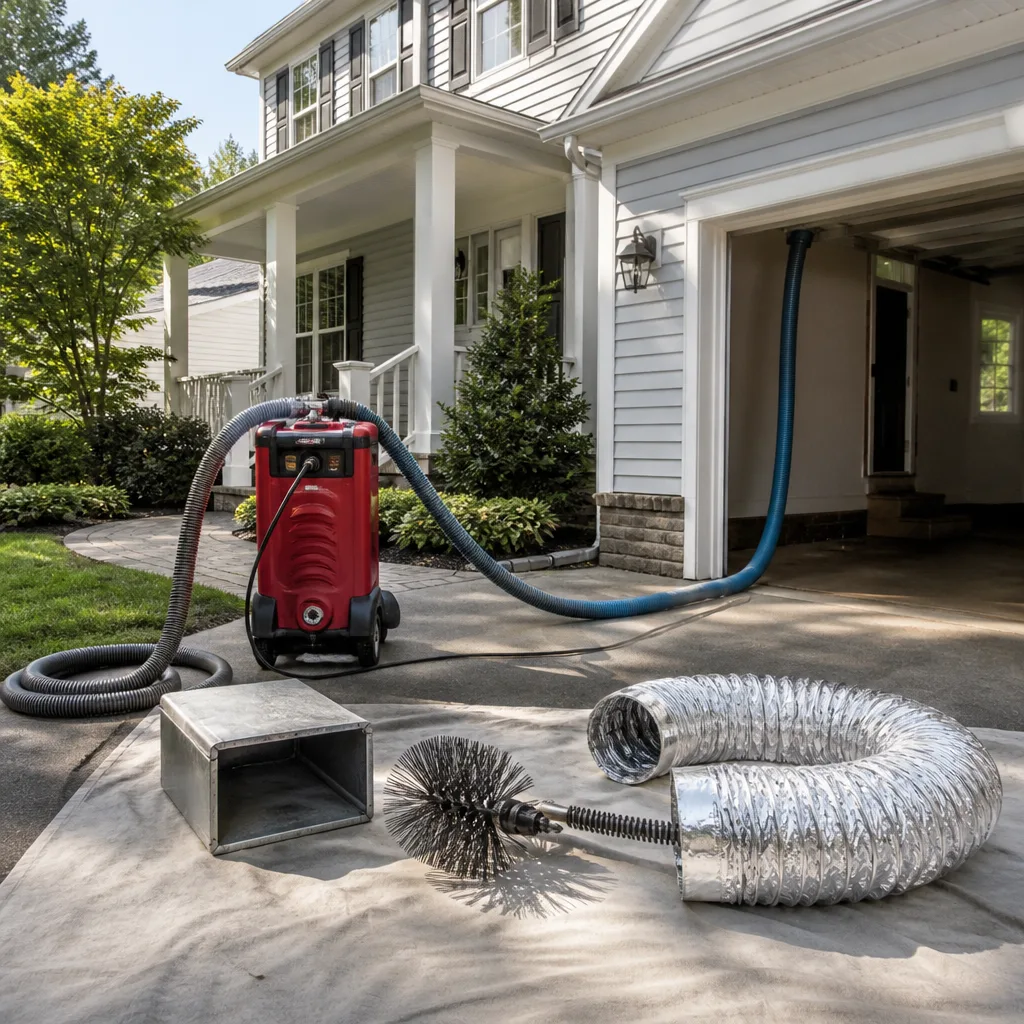 Whole-home duct cleaning
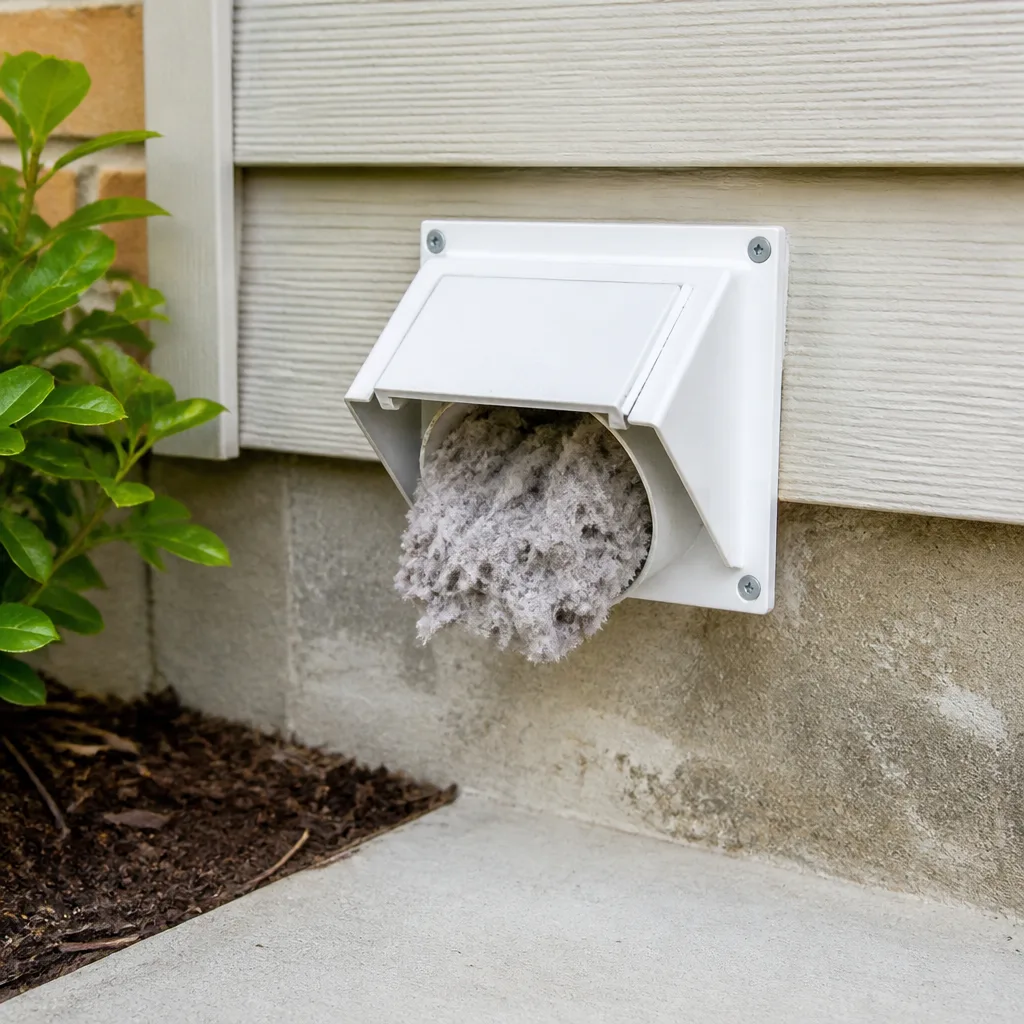 Dryer vent cleaning
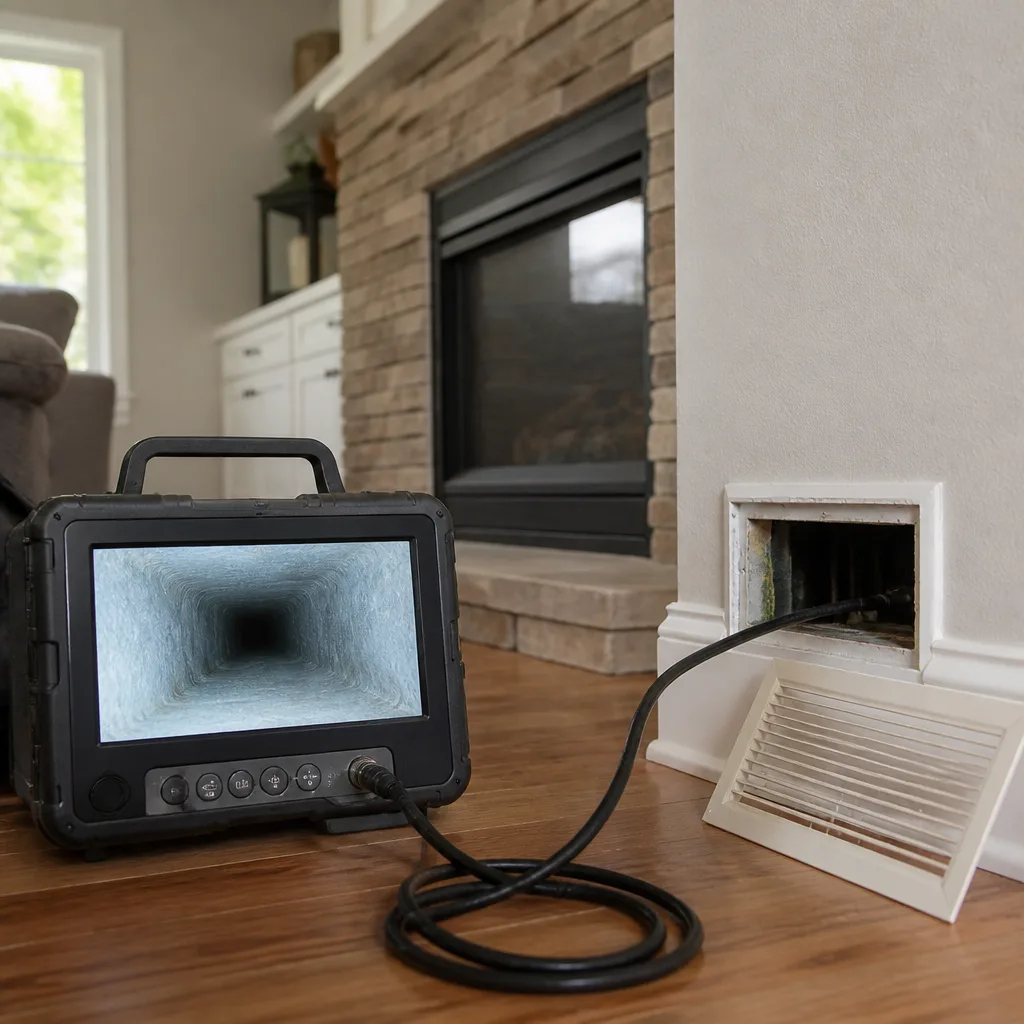 Camera inspection
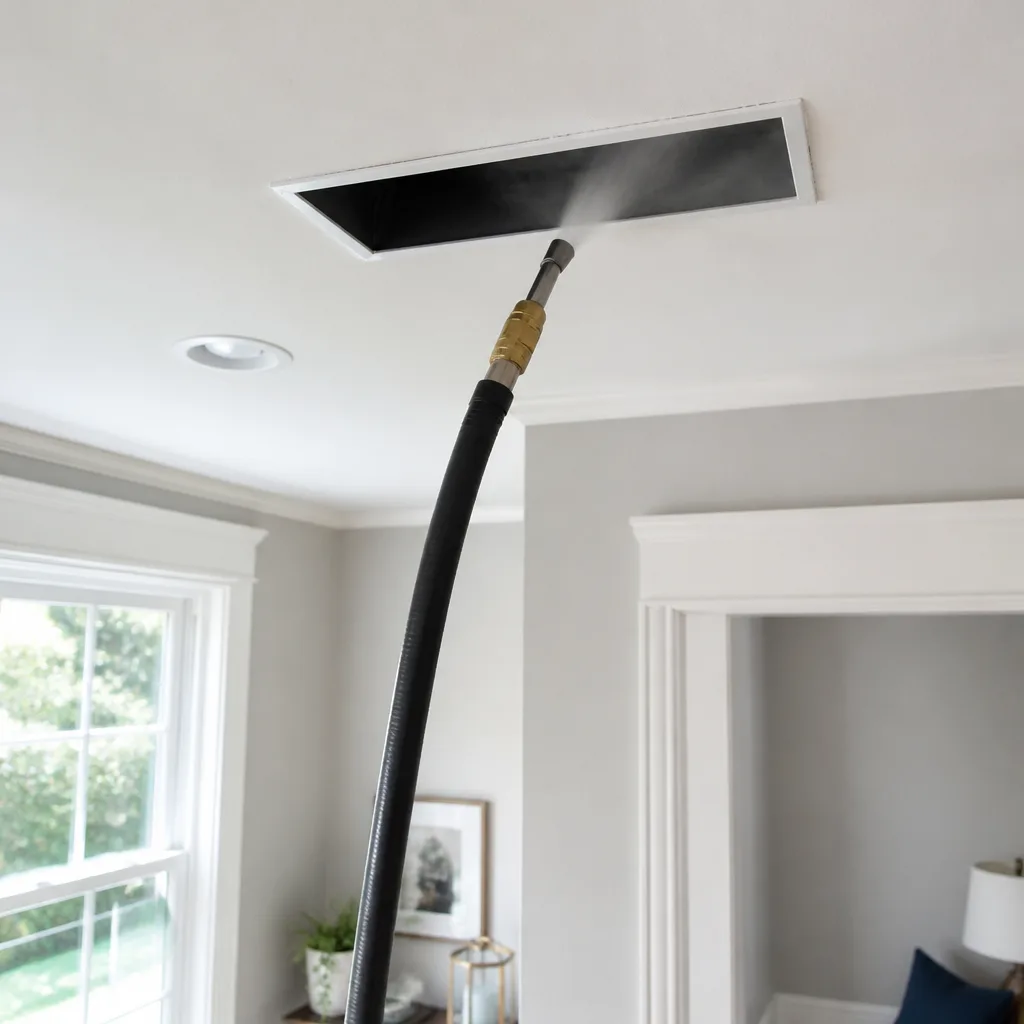 Sanitizing & deodorizing
Whole-system duct and dryer vent check with before-and-after photos - you see exactly what came out of your vents
That "$99 whole-house special" is a bait ad - the real number appears once they are in your hallway, or the "clean" is a shop-vac at the register. We photograph the inside of your ducts before and after instead.
Air Duct Cleaning Warning Signs: A West Hills Homeowner’s Reference Guide
Visible dust blowing out of a supply register isn’t the beginning of a duct problem. It’s the end of one. By the time dust reaches your furniture, your system has been carrying more debris than it can hold for months, and the earlier signals have already passed. Those early signals are quiet. They show up as energy bill creep, as filters that gray out faster than they should, as one bedroom that never quite matches the thermostat. In West Hills, where the inland valley heat keeps HVAC systems running hard for most of the year, those signals can build for two or three seasons before a homeowner connects them to the ductwork. This guide is about reading the early signs.
Quick Answer
The earliest warning signs of a duct problem in West Hills are a filter that loads up in three weeks instead of eight, a utility bill that climbs without a rate change, one or two rooms that stay a few degrees off from the rest of the house, and an odor that returns after you clean the register grille. Visible dust and musty smells are late-stage symptoms. If you notice any of the early signals, an inspection is worth scheduling before the system has to work harder to do the same job.
Styles & brands we work with
- Whole-home duct cleaning
- Dryer vent cleaning
- Camera inspection
- Sanitizing & deodorizing
Table of Contents
- Energy Bill Creep: The Indicator Most Homeowners Miss
- Filter Loading Rate: Reading Your Filter Like a Diagnostic
- Uneven Room Temperatures and Weak Airflow
- Odor Profiles and What Each One Actually Means
- Post-Renovation and Post-Smoke Events
- Moisture, Humidity, and the Duct Liner Problem
- When to Call a Professional
- Frequently Asked Questions
Energy Bill Creep: The Indicator Most Homeowners Miss
Duct leakage and debris accumulation on the evaporator coil don’t announce themselves. They raise runtime hours. Your system runs longer to reach the setpoint, the compressor cycles on more often, and the utility bill creeps upward by a few percent a month. Most homeowners attribute the increase to a rate hike or a hotter summer. In West Hills, that assumption almost always feels right, because the San Fernando Valley heat is genuinely brutal from June through October and every summer bill looks high. The pattern to look for isn’t the summer peak. It’s the month-over-month trend within the same season, compared to the same months a year or two ago.
Here’s how to read the pattern in your own data:
- Pull twelve months of utility statements, or your provider’s usage dashboard if you have one.
- Circle the summer months for each year you can see.
- Compare the same month year-over-year, not month-to-month. July against last July, not July against June.
- If the current summer month is running 8 to 15 percent higher than the same month a year or two ago, and you haven’t changed your thermostat habits or added a major appliance, that’s worth investigating.
- Note whether the increase is in the cooling months only. A jump that appears in summer and disappears in the mild West Hills winters points at the HVAC and duct system, not at the water heater or the refrigerator.
Debris on the coil reduces heat transfer, and duct leakage loses conditioned air before it reaches the room. Both raise the runtime hours the compressor logs, and both show up in the bill long before anyone sees dust at a register. If the pattern holds across two summers, an inspection is cheaper than another season of the same trend.
Filter Loading Rate: Reading Your Filter Like a Diagnostic
Your filter is the cheapest diagnostic tool in the system, and most homeowners replace it on a fixed schedule without ever looking at the loading rate. A standard MERV-8 filter in a healthy system usually shows visible gray loading somewhere in the six-to-eight-week range, depending on how much the system runs and whether there are pets or recent construction nearby. That’s a normal rate. The warning sign is a filter that’s visibly gray in three weeks.
Why does that matter? A filter loads faster than normal for one of two reasons, and both are worth knowing about:
- Higher particulate load entering the return side. If a return duct has a leak or a poor connection at a joint, it can pull attic or wall cavity air into the system. That air carries insulation fibers, dust, and whatever else lives in the cavity. The filter catches it, but the load is far higher than the system was designed for.
- Debris dislodging from inside the ducts. When the interior of the ductwork has accumulated a heavy layer of dust, any change in airflow pattern – a new filter with lower resistance, a blower speed change, a seasonal switch – can lift that debris into the airstream and send it straight to the filter.
Test it yourself. On a fresh filter, write the install date on the frame in marker. Check it every week. If it’s gray at three weeks, you’re looking at one of the two conditions above. If it lasts seven or eight weeks before it looks loaded, your system is behaving normally on the return side. In West Hills homes with evaporative coolers converted to refrigerated systems, the return-side ductwork is often a source of confusion, and a filter loading rate check is a quick way to see whether that assumption holds.
Uneven Room Temperatures and Weak Airflow
If two rooms on the same zone read five degrees apart at the thermostat, the system has an airflow problem. But not every airflow problem is a duct obstruction. Before you call anyone, run this sequence. It’s the same one we recommend to homeowners across West Hills.
- Check the damper. Many homes have manual balancing dampers at the branches off the main trunk. They’re usually behind a register boot or in the attic. If one is closed or partially closed, you’ve found the cause without any diagnostic work.
- Check the return grille. A return that’s blocked by furniture, a rug, or a piece of cardboard left near the unit starves the whole system. Clear it and see if the weak room improves.
- Feel the register airflow with your hand. Weak but steady airflow at one register while the others are strong points at an obstruction in that branch line. Weak airflow at every register points at the blower, the filter, or the main trunk.
- Check the filter. A loaded filter restricts the whole system. Restriction at the filter looks like a blower problem at every register, and it’s the most common cause of a whole-house airflow drop.
- Look at the blower. If the filter is clean and airflow is weak everywhere, the blower itself – a dirty wheel, a failing motor, or a capacitor – can be the cause. That’s a technician call, not a homeowner diagnosis.
If the damper is open, the return is clear, and the filter is fresh, and the room is still stubbornly off-temperature, the duct run for that room is the next place to look. In West Hills, long attic runs across a hot roof deck lose cooling capacity more than short runs do. A room at the far end of the house is more likely to have a duct problem than the room next to the air handler.
Odor Profiles and What Each One Actually Means
Odor is a diagnostic. The type of smell narrows down where the problem is. If a homeowner tells us they notice a smell, the first question we ask is what kind. Here’s how to sort the three most common profiles.
- Mildew or damp-earth smell. This usually points to moisture somewhere in the system. It could be condensation on the evaporator coil, water pooling in a condensate pan that isn’t draining properly, or damp duct liner in a section that sits in a humid part of the attic. A mildew smell that returns after cleaning a register grille is coming from further inside the ductwork.
- Burning dust smell. When a furnace fires up for the first time after a long off-season, a burning dust smell for a short period is normal. But a burning smell that persists, or that returns mid-season with no change in operation, can mean dust is accumulating on the heating elements or the heat exchanger. That’s worth a technician look, because a dust layer on a heating element is a fire concern, not just an odor problem.
- Chemical or plastic smell. This one is often the least understood. In older duct systems, the interior liner – the fiberglass or foil-faced material on the inside of the duct – can deteriorate over time. As it breaks down, it can release trace chemical odors into the airstream. A chemical smell with no obvious external source is a strong signal to have the duct liner inspected, not just cleaned.
If you can’t identify the source of a persistent odor after a week of airing the house out, the smell is in the system. A trained inspection will find it in less time than the guessing takes.
Post-Renovation and Post-Smoke Events
These are the two events that trigger an inspection regardless of when the system was last cleaned. Both are automatic. Both are commonly deferred by homeowners who assume the system is fine because it looks fine.
Renovation. Any project that involves cutting drywall, sanding, or demo work sends fine particulate into the air, and a large fraction of it ends up inside the ductwork through returns that run during the work. Even if the contractor sealed off the work area, the system pulls particle-laden air every time the thermostat calls for cooling. The visible dust settles on surfaces; the fine fraction stays suspended and gets pulled into the return. A system cleaned the week before a major renovation usually needs attention again after it.
Wildfire smoke events. West Hills sits in the San Fernando Valley, and the region sees smoke events most years, sometimes for days at a stretch. Smoke particles are fine enough to pass through standard filters and deposit inside the ductwork and on the coil. A system that was clean before a smoke event may not be afterward. If you can smell smoke inside the house days after the event has passed and the windows have been closed, the smoke has entered the system.
The bottom line: if either event happened, get an inspection, even if you had the ducts cleaned recently. Cleaning isn’t a one-time achievement. It’s a starting point, and the system collects new material every time it runs.
Moisture, Humidity, and the Duct Liner Problem
West Hills is dry most of the year, and that’s a genuine advantage for ductwork. It’s not an immunity. The evaporation coil and the condensate pan are wet whenever the system runs, and a duct system with poorly sealed connections near the air handler can pull humid air from the surrounding space into the airstream. Over time, that humidity can condense on the coil, drip into a pan that doesn’t drain quite right, and create a moisture reservoir in the ductwork that supports microbial growth.
The warning signs of a moisture problem inside the system:
- A mildew smell that comes and goes with the cooling cycle
- Water stains or rust at the base of the air handler or around the air handler cabinet
- A condensate drain line that drips slowly or clogs periodically
- Visible moisture or staining on the duct liner where the ducts run through a conditioned space
- Microbial growth visible at a register boot or on the filter media itself
Cleaning without addressing the moisture source doesn’t solve the problem. If the drain is slow or the pan isn’t pitched correctly, the growth comes back. That’s why we frame any moisture issue as a two-part job: clean and sanitize the affected surfaces, then find and seal the source of the moisture. Guardsman protection products applied after the work extend the sanitation result by slowing regrowth, but they don’t substitute for fixing the underlying source. If you’re seeing moisture signs, get the system looked at sooner rather than later.
When to Call a Professional
Some of what this guide covers can be handled on your own – checking dampers, replacing filters, clearing returns. The other items need a trained eye and professional-grade tools. Call a professional if the filter loading rate stays under four weeks after a fresh install, if the energy bill trend has been climbing for two summers without a rate change, if an odor returns after cleaning a register, if there’s any burning smell that isn’t a first-fire event, or if you’ve had a renovation or a smoke event since the last cleaning. Those are the cases where a visual inspection with a camera and a proper airflow test will save you money over guessing.
Air Duct Cleaning West Hills offers free estimates in West Hills – call (855) 658-4109. We answer 24/7. Fast dispatch from 7am to 7pm, Sunday through Friday. Our technicians have up to 15 years of experience and use professional equipment from Rotobrush and Abatement Technologies to inspect and clean the full system, not just what’s visible at the register.
How a Full-System Inspection Actually Works
The word “inspection” gets used loosely. A real one looks at the whole system, not just the parts a homeowner can reach. Here’s what it involves, so you know what you’re paying for.
- Airflow measurement at the registers. A handheld anemometer reads airflow volume at each supply and return. A register that reads significantly lower than its neighbors is flagged for closer inspection.
- Camera inspection of the main trunk and branch lines. A small camera goes into the ductwork through a register boot or access panel and records what’s actually inside. This is how a liner failure or a disconnected joint gets found without cutting into drywall or attic ductwork.
- Static pressure measurement. A manometer at the air handler reads system pressure. High static pressure on the supply side with low pressure on the return side points at a restriction or a leak. This is one of the more reliable indicators of duct leakage.
- Return-side leak test. A smoke pencil or a thermal camera checks the return joints and connections for leaks that pull air from unconditioned spaces.
- Coil inspection. A visual inspection of the evaporator coil with a mirror or camera to check for debris loading, mold, and moisture. A coil that’s loaded needs cleaning, and a coil that’s wet needs a moisture source found.
- Filter loading assessment. The technician looks at the filter and asks when it was last changed. A filter loading rate that doesn’t match the system’s normal use pattern is a red flag.
A thorough inspection takes time. If the whole visit is a vacuum job at the registers, no one measured airflow, and no one looked inside the ductwork with a camera, you didn’t get an inspection. That’s the difference between a full-system service and a coupon-level cleaning, and it’s the difference the system will show you over the next season.
Common Mistakes to Avoid
- Judging the system by what’s visible at the register. Dust at the register is a late symptom. The early signals – filter loading rate, energy bill trend, room temperature variance – show up long before anything is visible. Look at the data first, and the register second.
- Replacing the filter on a fixed schedule without checking the loading rate. A filter replaced every three months on schedule is fine for a healthy system. But a filter that’s gray in three weeks is telling you something the schedule ignores. Write the install date on the frame and look at it before replacing.
- Assuming a recent cleaning means the system is still clean. In West Hills, where the cooling season runs months longer than most of the country, a system that was cleaned before a renovation or a smoke event is due again. Cleaning is a starting point, not a permanent state.
- Treating every odor as a duct problem. A chemical smell points at duct liner deterioration. A burning smell points at debris on heating elements. A mildew smell points at moisture. Each has a different fix, and starting with the wrong one wastes the visit.
- Using consumer-grade equipment for a residential duct system. A shop vac and a brush doesn’t move enough air to dislodge the debris that matters. Professional negative-pressure extraction and rotary agitation are what actually clean a duct system, not just knock dust off the register face.
- Skipping the dryer vent because the air ducts were cleaned. They’re separate systems, and the dryer vent is a fire concern that many duct-only services don’t address. See our dryer vent cleaning page for how that service works.
- Ignoring a moisture problem after cleaning. Cleaning without finding and fixing the moisture source means the growth comes back. The moisture source is the actual problem; the cleaning is the cleanup.
See the difference
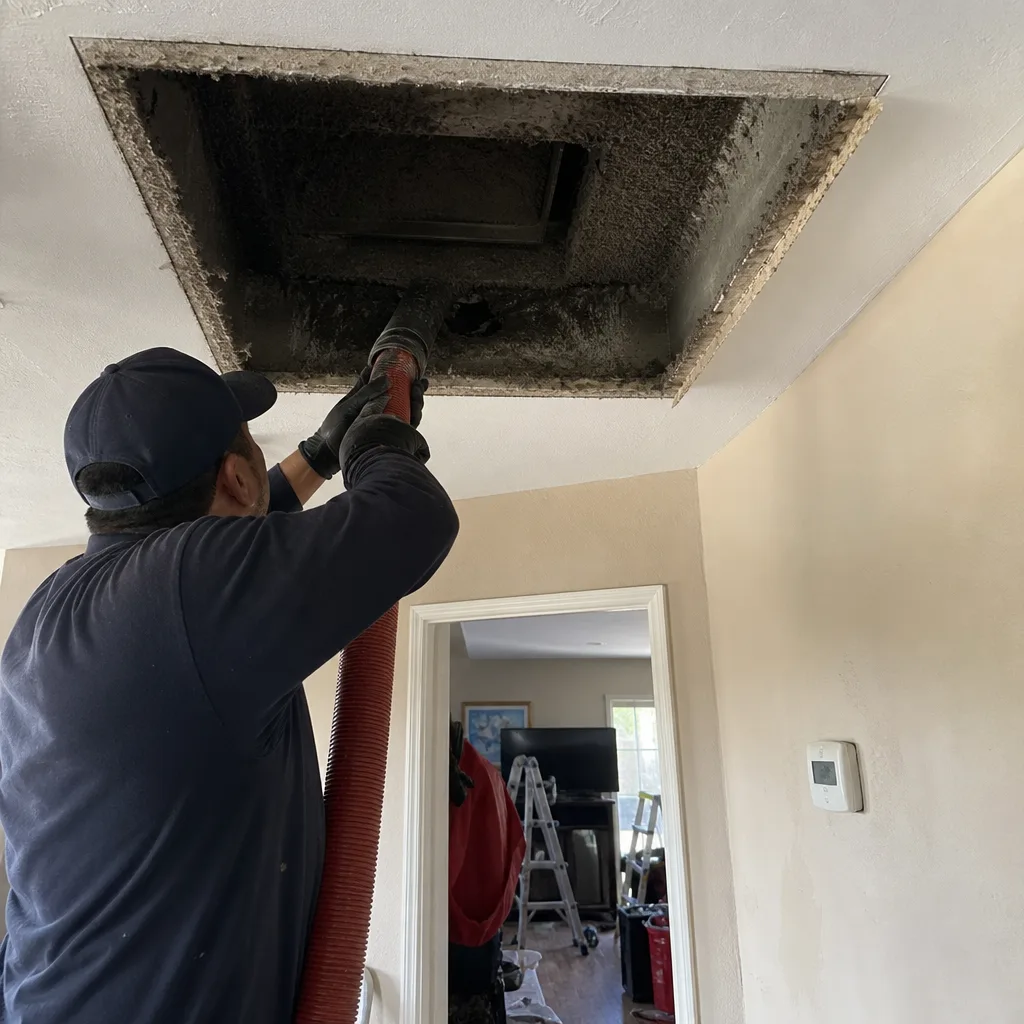 Before
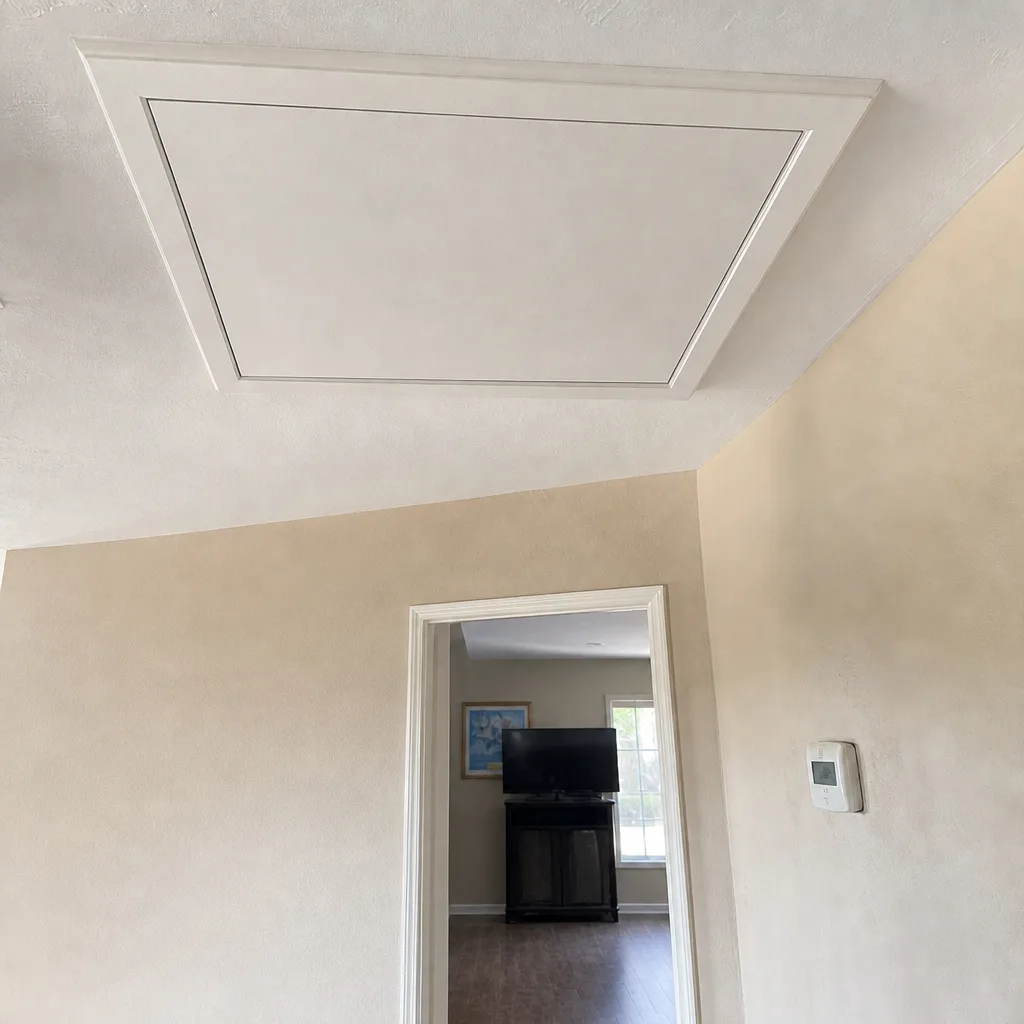 After
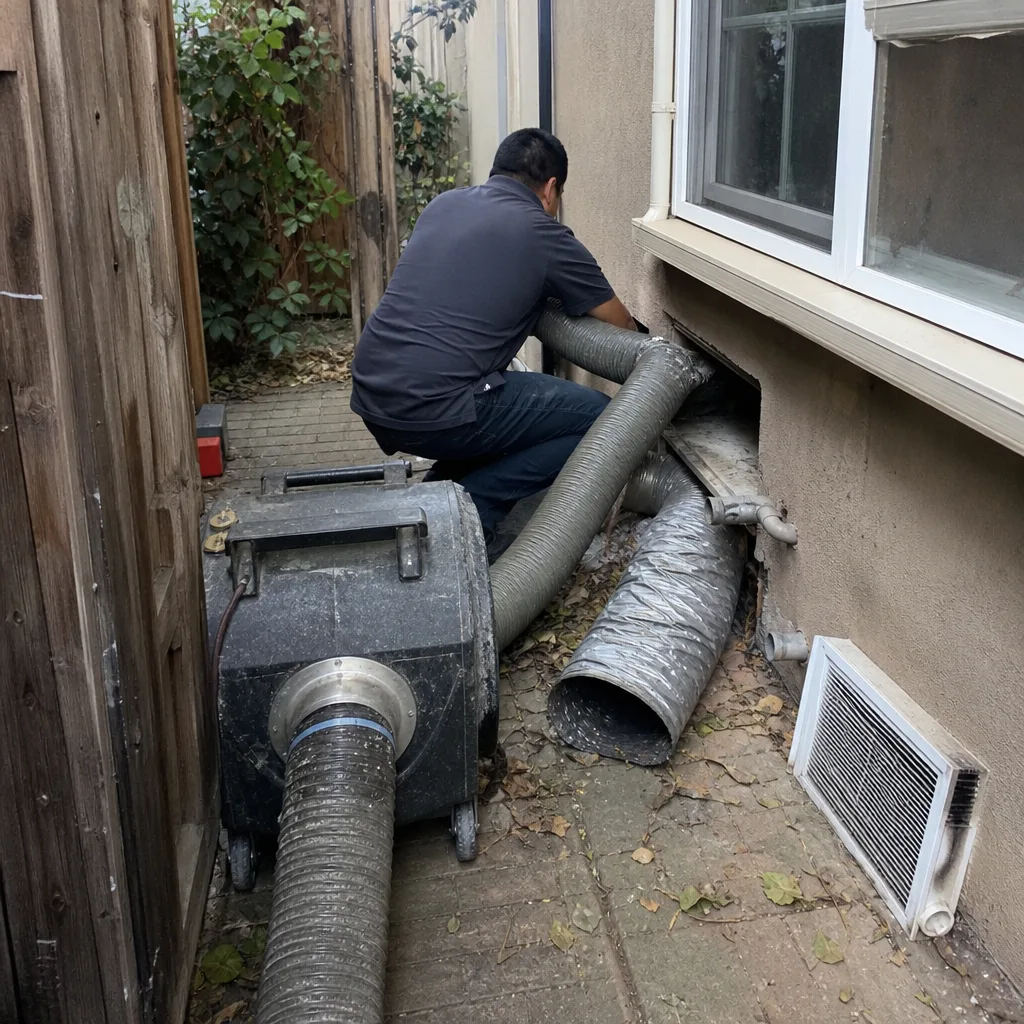 Before
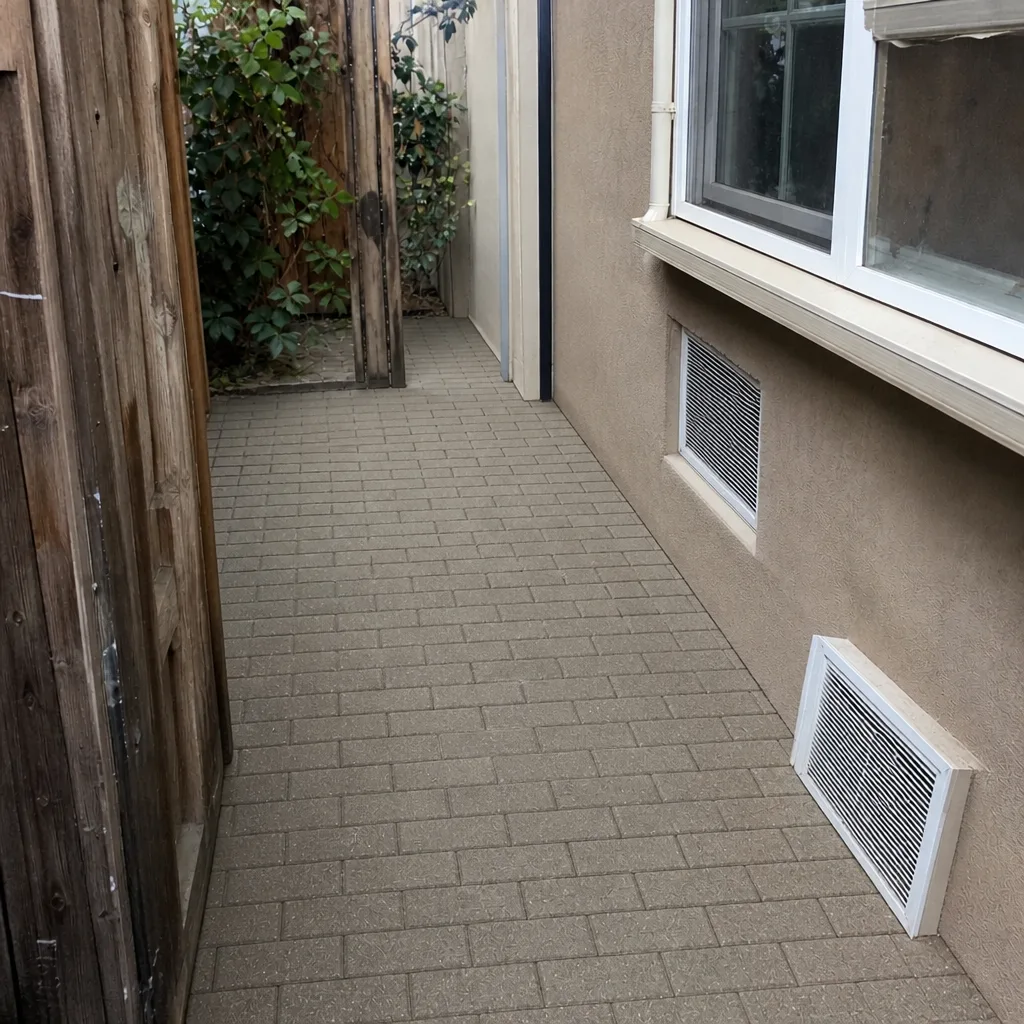 After
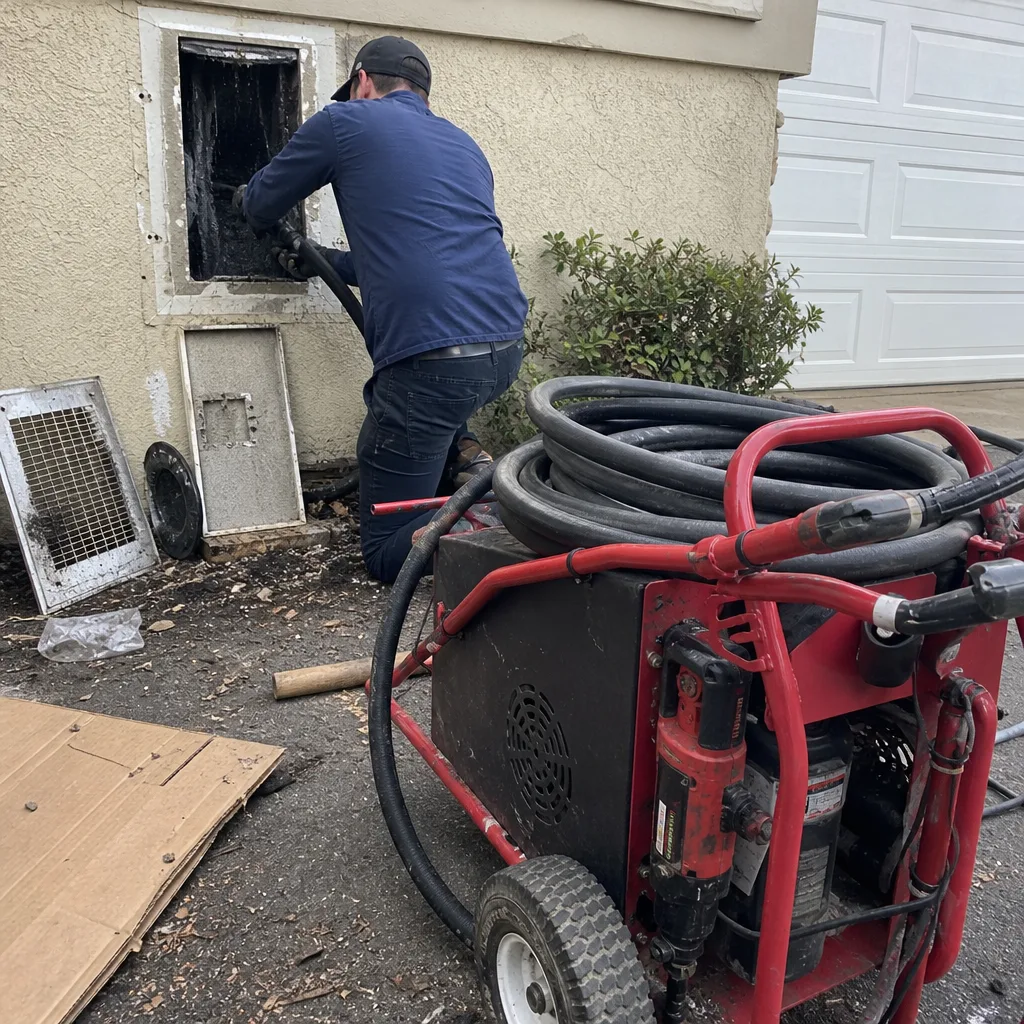 Before
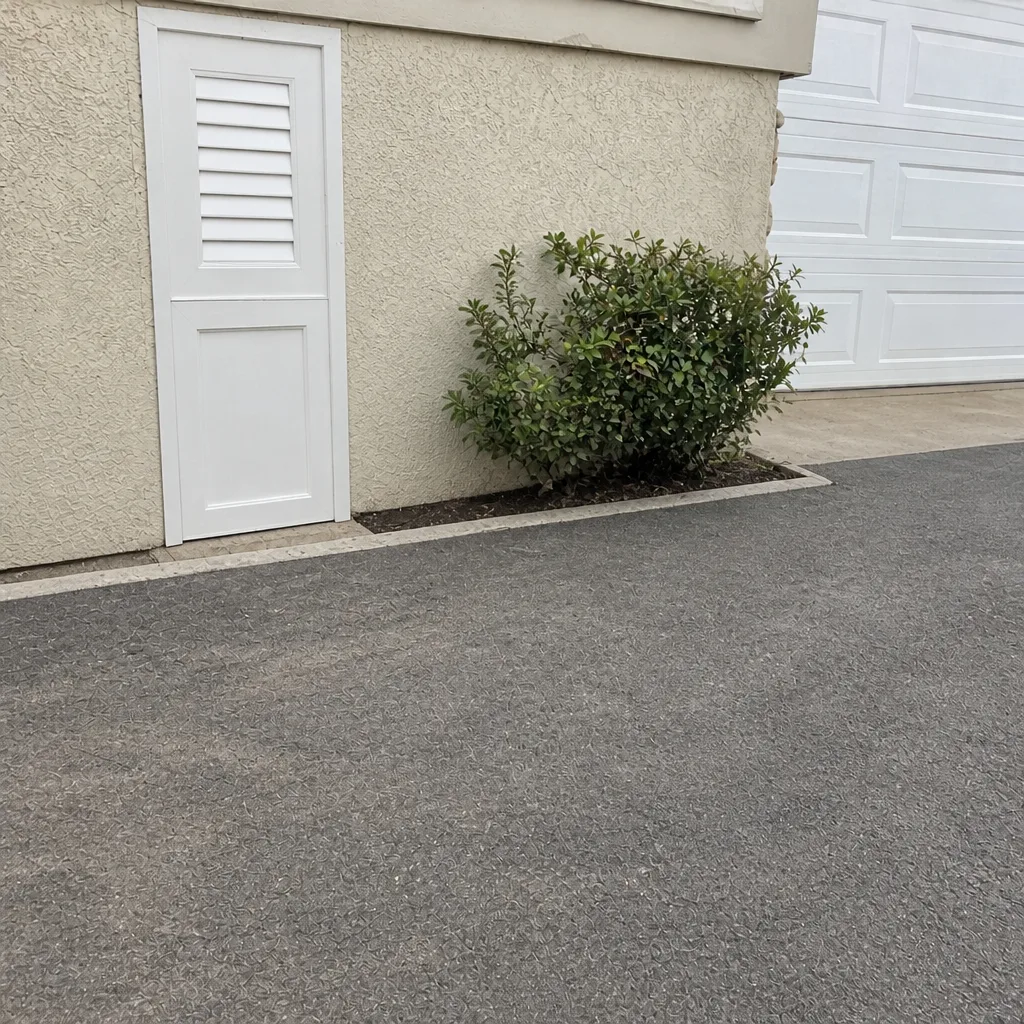 After
How West Hills Homeowners Can Read Their Own System
You don’t need professional tools to do the first pass. Here’s a short homeowner checklist, and if any item fails, that’s your signal to bring in a trained technician.
- Write the date on the filter frame and record the loading time for the current filter. If it’s gray in under four weeks, that’s a flag.
- Pull two years of utility bills and compare the same summer month year-over-year. A climb of more than 8 percent with no rate change is worth looking into.
- Place a thermometer in the room that always feels off, and one in a room that feels right. A consistent difference over five degrees points at that branch run.
- Run a smell test: smell each register after the system has been running for thirty minutes. Note the type of smell, not just the presence of one.
- Check the return grilles for obstructions. Furniture, rugs, and cardboard near the return starve the system.
Those five checks take an afternoon. They’re the same early signals a technician would start with, and they’ll tell you whether the next call is worth making.
What a Cleaning Actually Addresses
When we clean a residential duct system, we use a rotary brush (Rotobrush) to agitate the interior surfaces, and a negative-pressure extraction unit (Nikro, HEPA-filtered through Abatement Technologies equipment) to pull the dislodged debris out of the system. The combination is what separates a real cleaning from a vacuum pass. Agitation without extraction just loosens debris; extraction without agitation leaves adhered deposits. Doing both, in the right order, is the standard.
What cleaning addresses: debris accumulation inside the ducts, debris loading on the evaporator coil, microbial growth that has a moisture source, and the fine material that gets into the system through a renovation or a smoke event. What cleaning doesn’t address on its own: duct leakage, liner deterioration, or a disconnected branch that’s pulling attic air into the return. Those are repair and sealing jobs. If a full-system inspection turns up a leak or a liner failure, the fix is repair and sealing, and that’s a separate step from cleaning. Do both, not one.
If you’re considering a whole-home air quality upgrade, the system is worth looking at as a complete package. We work with Honeywell and Aprilaire whole-home filtration systems, which add particle removal at the system level rather than at the register. That’s a different conversation from a cleaning, and it’s worth having after the system is clean, not before. Duct repair and sealing, when needed, is also part of the same visit. No handoffs to another vendor for the leak you just found.
Frequently Asked Questions
For a typical West Hills home, every three to five years is the usual range, but the right interval depends on the system, the household, and recent events. The three cases that shorten the interval are: pets or allergy-sensitive occupants, any renovation in the home since the last cleaning, and any wildfire smoke event that affected the area. Filter loading rate is the practical check. If the filter is graying in three weeks, the system is loading faster than a three-to-five-year cadence can manage.
It’s worth it when the work addresses a real condition – debris accumulation, coil loading, moisture-driven microbial growth, or post-renovation and post-smoke debris. It’s not worth it when the service is a coupon-level vacuum pass that doesn’t include a camera inspection, airflow measurement, or negative-pressure extraction. The difference isn’t in the price; it’s in what’s actually being removed and measured. Ask what equipment is used and what the technician will check before the work starts; a company that can’t answer both is probably doing the coupon version.
Two reasons. First, the cheap quote often doesn’t cover the same scope: no camera inspection, no airflow measurement, no negative-pressure extraction, and sometimes just a shop vac at the registers. Second, some quotes are teasers – a low number that becomes a larger invoice once the technician is on site and “finds” more. We work on one flat price per system, agreed in writing before any work starts, with before-after photos of the specific ductwork we cleaned. If a quote seems unusually low, ask what’s included and what changes the price after the visit begins.
Ask for before-and-after photos of your specific ductwork, from inside, taken with the inspection camera. Ask for the airflow numbers from before and after at the same registers. A real cleaning produces both. If a company can’t show you the inside of your own ducts before and after, you have no way to confirm what you paid for – and that’s a legitimate thing to ask before you book.
It means the system is loading faster than a standard MERV-8 filter is designed to handle, and there are two common causes. Return-side duct leakage pulls attic or wall-cavity air into the system, and the filter catches it along with everything else. Or interior duct debris is being dislodged and lifted into the airstream, and the filter catches that too. An inspection with a camera and a static-pressure test at the air handler will tell you which, and both are fixable.
Yes, in most cases, because both events introduce fine particulate into the system faster than normal use ever does. A renovation sends drywall dust and demolition particulate into the return; a wildfire smoke event introduces fine smoke particles that pass through standard filters. If the smell of smoke lingers indoors days after the event, or if visible dust starts showing at registers after a remodel, the system has loaded again and is worth a fresh inspection. Call (855) 658-4109 for a free estimate – estimates are free.
The Bottom Line
The warning signs that matter most in a West Hills home are the ones you can measure before you can see: filter loading rate, energy bill trend, and room-to-room temperature variance. Visible dust at a register is a late signal, and by the time it shows, the system has been carrying a load for months. If any of the early signals are present, a full-system inspection with camera and airflow measurement will tell you what’s actually happening inside the ductwork, and the fix is always cheaper than another season of guessing. Our technicians have up to 15 years of experience and use Rotobrush rotary agitation, Nikro negative-pressure extraction, and Abatement Technologies HEPA filtration to inspect and clean the whole system. If you’d rather have the answer than the hunch, call (855) 658-4109 for a free estimate. We answer 24/7. Fast dispatch from 7am to 7pm, Sunday through Friday.
If you’d like to start with the broader picture, our Air Duct Cleaning West Hills page covers the full service lineup, and air duct cleaning has the process detail for a standard residential job. For the HVAC side of the system – coil cleaning, blower service, and airflow correction – see our HVAC cleaning page. And if you’re cleaning ducts, check the dryer vent in the same visit; dryer vent cleaning is a separate system and a separate fire concern.
Written by the team at Air Duct Cleaning West Hills.